

- >>
- Reports
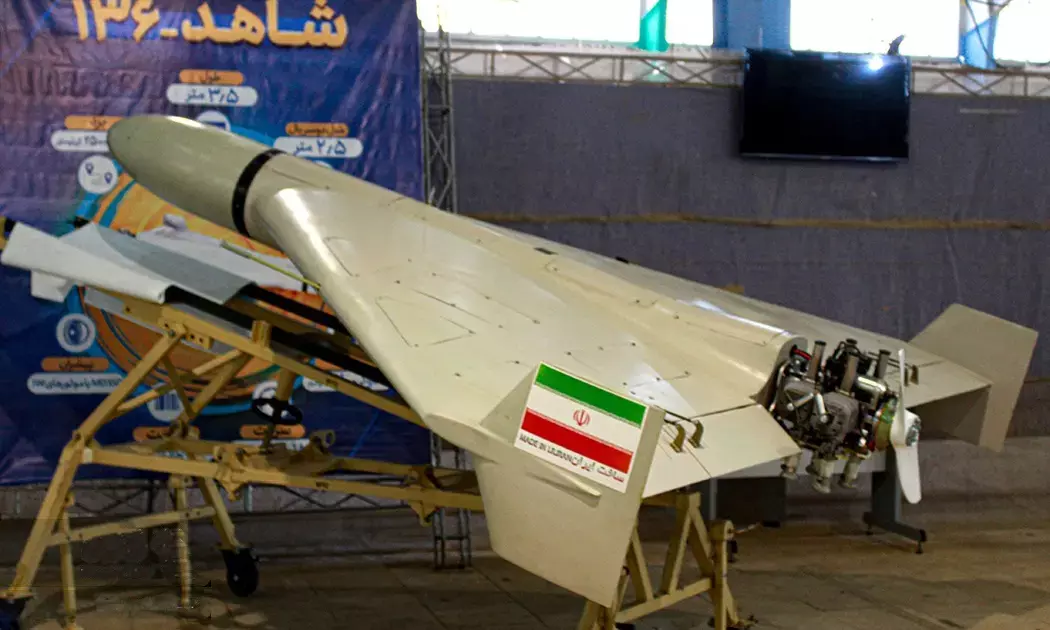
Iran has surprised or shocked the world by the display of missile and drone power against the US and Israel when the latter thought that their airpower would crush Iran, which has no air force worth the name. The air escalation that the US and Israel resorted to only resulted in a greater and stronger retaliation by Iran with an endless supply of missiles and drones.
While Iran was concentrating on building missile and drone capability to fight an asymmetric war, the US and Israel were concentrating on a less important thing, Iran’s (non-existent) nuclear weapons programme, and were flummoxed when Iranian missiles and drones rained on them.
Unnoticed or poorly evaluated by the US and Israel, Iran had been preparing for missile and drone warfare for decades with innovative procurement, manufacturing and locational techniques that conventional militaries did not think about and plan for.
All that the US and Israel were aware of was that Iran’s arsenal of missiles was hidden underground. What was not so well known was the way the arsenal was built up and was being maintained.
The Iranians built their ballistic missiles by putting together smaller pieces that could be more easily smuggled and reassembled, making the task of finding them more difficult. The Israelis got an inkling of this when they found that Iran had largely renewed its ballistic missile project after the 12-day war in June 2025.
The Israelis were shocked to find that Iran had developed different types of ballistic missiles, which followed an “arcing path” high into the atmosphere and then used gravity to reach velocities many times faster than the speed of sound, pointed out John Ismay in The New York Times.
Iran’s longest-range ballistic missile can strike targets about 1,200 miles away. In 2019, the Defence Intelligence Agency said that Iran possessed “the largest and most diverse ballistic missile arsenal in the Middle East.”
Iran has built an arsenal of ballistic missiles categorised as “close-range” that can hit targets from about 30 to 190 miles away, “short-range” weapons that fly 190 to 620 miles, and “medium-range” missiles that have a maximum range of about 1,240 miles, Ismay says.
Both the Americans and the Israelis realised that powerful bombs had not dented Iran’s missile launching capability, and concluded that a ground invasion with special forces would shock and awe the Iranians, forcing them to surrender. Since this would lead to colossal human casualties, an alternative was mulled – negotiating peace with the support of other powers using the global energy crisis as the excuse. The bid for a peaceful end is currently in motion with Pakistan, Turkiye and Saudi Arabia lending a helping hand to the US.
But the preconditions placed by Iran and the US/Israel make bridging the gulf almost impossible. Both sides are not in a position to dilute their demands, Iran because its very existence is threatened and the US because President Trump’s bloated ego and Israeli Prime Netanyahu’s insecurities will not allow going halfway.
Therefore, while the US and Israel will continue to pound Iran and possibly try to take Kharg Island, Iran will continue enhancing its missile production and retaliatory capabilities.
As pointed out earlier, Iran maintains its weapons production through a combination of domestic self-sufficiency, underground location and global procurement networks.
The main planks of Iran’s missile/drone production and storage systems are as follows:
(1) Indigenisation - Iran produces roughly 90% of its own weapons. Due to decades of sanctions, it has mastered the art of "adaptive innovation".
(2) Reverse Engineering – According to the US, Iran uses “corporate espionage and intellectual theft” to create local copies of Western and Soviet equipment.
(3) Using dual-use components - For its famed “Shahed” drones, Iran sources off-the-shelf commercial components that are difficult to track or sanction.
(4) Building "Missile Cities" and Underground Facilities - To protect production from airstrikes, Iran has built vast underground "missile cities". These facilities are carved deep into mountains and reinforced with concrete.
(5) Mobile Launchers - Some facilities use rail tracks to move missiles rapidly to concealed launch hatches, ensuring the arsenal remains operational even during active conflict.
(6) Global Production and Supply Networks - Iran has expanded its manufacturing footprint beyond its borders, establishing drone and weapons assembly plants in countries like Tajikistan, Russia, Ethiopia, and Venezuela.
(7) Axis of Resistance: Iran has formed an axis of resistance, which provides the technology and training for its regional allies (Hezbollah in Lebanon and the Houthis in Yemen) to manufacture their own drones and missiles locally, creating a self-sustaining decentralised network.
(8) Strategic Partnerships - Despite sanctions, Iran continues to receive critical materials and advanced systems (like trainer jets and armoured vehicles) from Russia and imports specialised missile components, like solid fuel mixers, from China.
(9) High-Volume, Low-Cost Strategy - Iran focuses on a "cost-imposition" strategy, producing massive quantities of inexpensive weapons to overwhelm advanced and expensive defences.
(10) Exploiting Asymmetric Advantage – Iran produces and deploys low-cost loitering munitions (drones) that allow Iran to maintain a credible deterrent at a fraction of the cost of traditional air forces.
Recent estimates suggest Iran can produce over 100 missiles per month, far outstripping the production rate of the expensive interceptors used to stop them.
China and Russia are helping Iran through weapons delivery, supply chains and satellite intelligence. Iran, China and Russia form what The Atlantic Council calls an “Axis of Evasion.” The axis helps evade US sanctions.
China enables Russia and Iran by importing their sanctioned oil and selling them sophisticated dual-use technology in turn. Russia’s shadow fleet of oil tankers, as well as on alternative payment systems, and barter trade play a part in breaking US sanctions.
There is an integrated supply chain among the three. Trade and technology transfer between China, Russia, and Iran—and the associated supply chains—are the result of geography as well as significant Western economic pressure. Due to restrictive export controls and sanctions, these states cannot easily access Western technology and components directly from the US and other Western countries. Because trade among the Axis of Evasion occurs outside of the Western financial system and, therefore, the reach of Western economic restrictions, these integrated supply chains are more resistant to sanctions and export controls enforcement, the Atlantic Council says.
Iranian UAVs, such as the Shahed series, rely on an ecosystem of imported electronics, engines, navigation components, batteries, and semiconductors. While many of these parts originate in the US, Europe and Japan, procurement networks frequently get them through Chinese distributors or trading companies before they reach Iranian manufacturers. Chinese dual-use exports to Iran spiked in January 2024.
Since 2022, Moscow and Tehran have exchanged drone technology and production know-how, allowing both countries to expand manufacturing capacity. As part of a deal, Iran transferred 600 disassembled Shahed-16 drones, components for 1,300 drones, training, and technical expertise to Russia to assist in its war in Ukraine.
Chinese electronics markets and distributors play a critical role in this process. Components originally manufactured for civilian applications—such as inertial sensors or satellite navigation modules—can be purchased through Chinese intermediaries and integrated into Iranian weapons systems. Russia’s experience adapting commercial electronics also feeds into this innovation ecosystem.
Some experts believe that Iranian drones and missiles incorporate Chinese satellite navigation systems to target US and Israeli military assets. In November 2025, a separate network connected to Iran’s Aircraft Manufacturing Industrial Company was accused of using shell firms to acquire Chinese sensors and navigation equipment.
In 2021, China gave Iran access to BeiDou, the global positioning satellite system owned and operated by the China National Space Administration. Since the start of the war with the United States and Israel, Iran has used BeiDou to produce decoy signals to confuse threat analysis and conceal actual Iranian military movements.
Iran’s ability to sustain missile and explosives production depends on access to chemical precursors and industrial materials. Although these substances are subject to Western export controls, enforcement is more difficult when production is distributed across multiple jurisdictions, the Atlantic Council says.