

- >>
- Reports
The world of short films is slowly getting inundated with films that are not looked at happily by the theatrical circuit. Because they are ‘short’ and short films do not have space for theatrical screenings and secondly, because many of them these days are stepping into areas not looked at kindly by the mainstream audience.
The happy note in all this is that these films are getting praised by the media and are being awarded at international film festivals.
The two films this critic is reviewing here are Jasmine That Blooms in Autumn directed by the talented and gutsy Chandradeep Das and Elijah written, produced and directed by Razid Season. Chandradeep Das’ film has won the #KASHISH2025 Best Indian Narrative Short Award.
The common features in the two short films are (a) they are both directed by Bengali directors, (b) they deal with the rather delicate issue of alternative sexual preferences and (c) both are short films.
Since Jasmine that Blooms in Autumn is directed by a Bengali rooted to Kolkata, India and Elijah is written, directed and produced by a Bengali settled in the US, the two films are based on two quite contrasting perspectives united in their singularity of purpose and statement : the pain of belonging to an alternate group of people who are considered, stamped and labelled as “the other” by the mainstream people in society, never mind whether the locations are as different as an old age home in Kolkata for the former film and a middle-class, NRI Bengali Muslim family rooted in the US.
Chandradeep Das’s film digs deep into the loneliness of two elderly women, thrown together in a dilapidated old-age home who, though living in two separate rooms, feel a strange pull towards each other and exchange strange ‘gifts’ to underscore their clandestine relationship.
I loved this film in terms of cinematography, probably shot in natural light or in the dark, the subtle, low-key music and the ambience of the old age home with a death thrown in.
The two women, almost at the edge of their lives, (Sudipa Basu and Uma Jhunjhunwala) are past their prime but feel a strange pull towards each other. Sudipa picks jasmine flowers fallen from a tree in the compound, threads it into a floral hairpiece and gifts it to Uma. It is a beautiful film on female friendship between two old women in a middle-class old age home.
What bugged me about this relationship between these two elderly women is – how does one define it as a 'queer' relationship when they both are beyond their sexual desires? This is a question that keeps dogging me no end since the write-ups and the awards mentioned on social media platforms are showering praises on the ground of it being a story on a queer relationship between two aged women.
In response to this question, Chandradeep says - The film endeavors to make a strong commentary against patriarchal repression through the love story of two women in the autumn of their lives. For most of her melancholy life, Indira has unwillingly played the role of an archetypal Bengali bride in a flagrantly patriarchal family. Such novel feelings are an uncharted realm of rhapsody and solace for her. Meera, on the other hand, is comfortable with her sexual identity. Her actions are forthright and unreserved; sometimes, they are overwhelming. As Indira muddles through her new-found romantic sentiments, Meera’s assertive and heavy-handed approach strikingly resembles the patriarchal repression Indira had endured throughout her married life. As their romance blossoms, Indira subtly conveys to Meera that her overly demanding requests can be detrimental to their relationship.
Winner of multiple international awards, Chandradeep Das has assisted his father, late Anjan Das, an eminent National award-winning Bengali filmmaker, in his last 3 internationally acclaimed features namely Achin Pakhi (2010), Bedeni (2011), and Banshiwala (2010). He was a co-writer and an associate director in his Dad's last film Ajana Batas (2013), which had its world premiere at International Film Festival of India, 2013 under the Indian Panorama section.
Chandradeep deserves a pat on the back for choosing Sudipa Basu who is perhaps one of the most underrated brilliant actresses in the world of theatre, cinema and television. Jhunjhunwalla with her box of folded paans, silences and solemn face is very expressive. That touch with Sudipa gradually losing her memory is touching and Uma's shocking memory of jasmine flowers in her youth is equally emotional which perhaps makes her hesitate before she finally wears the garland around her bun.
Uma Jhunjhunwala is an acclaimed actor, director and playwright in theatre though she is not often seen in films. Her impressive repertoire: includes directing 31 plays, 48 stories, 12 one-act plays, and 8 children's plays, as well as acting in over 50 plays.
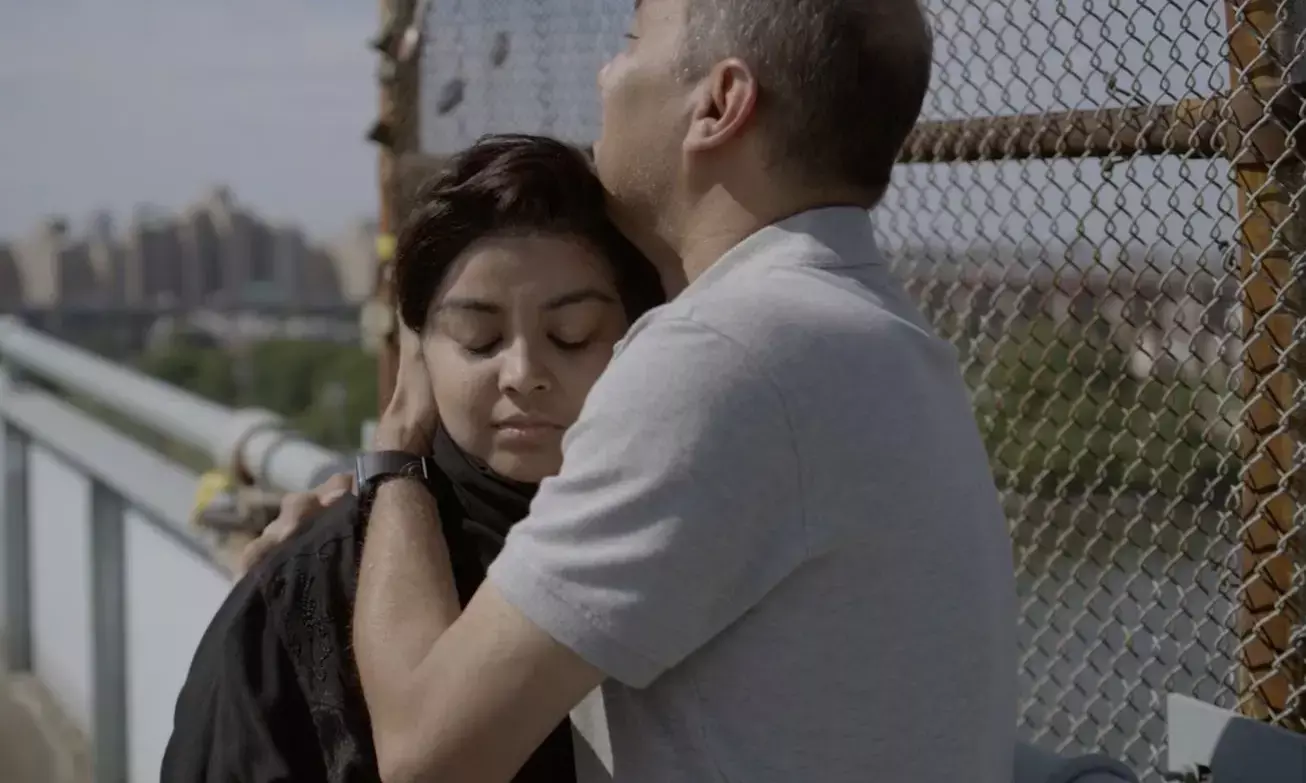
Elijah is a different story altogether. Produced, directed and written by Razid Season, it explores the conflict that arises when the only, college-going daughter of a NRI Muslim couple, declares that she likes boys and she feels and believes she is a boy. The shocked parents are stumped mainly because they are afraid, firstly because being traditional Muslim, they are afraid of being outcasted by their community and secondly, they live and work in the US and are already outcast. But they finally come to terms with their daughter and the father introduces his child to a visiting family as “my son.”
The daughter chopping off her hair as a language of protest is quite telling because long hair stands as a symbol of femininity across Asian cultures. Though the subject is fragile and challenging, director Season dealt with his film with the restraint and subtlety it demands.
Says Season, “In Elijah, I deal with gender identity issues within a working class color immigrant family, which became a victim of the American dream. I personally volunteered for hundreds of transgender youth going through their crisis, and I volunteered for Yellow and Green Cab taxi drivers in New York City. Many of them were people of color, and some of them faced bankruptcy due to crashing taxi medallion values in New York City. My goal was to highlight the impacted minorities, those who have rarely found space in the mainstream of our capitalist American society.”
He insists that mainstream media has not been able to handle the subject of alternative identity with the finesse it demands and the representation has been rather cliché. This is not our reality, and we are committed to bringing original stories that will represent and speak for these communities, both their strengths and challenges. This is what he strove to avoid in his film and hopes his message reaches his audience the right way.
Both films are executed with aesthetic artistry but Elijah, this critic feels, could have been sharper and more incisive.