

- >>
- OPINION
A Peace Plan That Denies Genocide And A Future For The Palestinians
World governments complicit
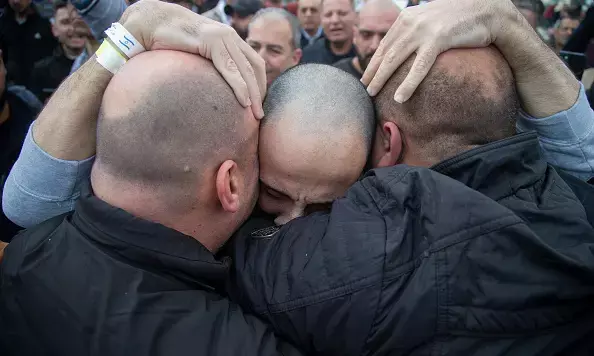
For two years, Israel has subjected the people of Gaza to mass starvation, catastrophic death tolls, and the relentless destruction of homes, hospitals, schools, and cultural life. Gaza has been reduced to rubble not by accident or miscalculation, but through the systematic application of violence aimed at erasing a people’s very existence.
What Palestinians have long known, international institutions have been slow to admit. On 16 September 2025, the United Nations Commission of Inquiry finally confirmed what survivors and human rights defenders have insisted since the outset: Israel is committing genocide.
That formal acknowledgment, however, has not translated into meaningful action. International law, including the Genocide Convention of 1948, obliges states to prevent and punish such crimes. Yet, while resolutions, statements, and even condemnations circulate, there remains no genuine move to hold Israel accountable through sanctions, arms embargoes, or prosecution of its leaders.
The gap between recognition and response reveals the true fault line: the West’s political will has never been aligned with justice for Palestinians.
Rather than uphold the UN findings, the United States chose a different path - doubling down on complicity. Trump’s “Peace” was entrenched subjugation.
On 29 September, US President Donald Trump unveiled a proposal framed as a “ceasefire” and a step toward stability. In practice, the plan subordinates Palestinians to external governance, denies them self-determination, and entrenches Israel’s control over Gaza’s territory and borders.
What is marketed as a peace initiative is, in essence, another political manoeuvre to shield Israel from accountability while tightening its colonial grip.
The proposal echoes a long history of failed diplomatic formulas that impose peace without justice. From the Oslo Accords of 1993, which promised statehood but delivered deepened occupation, to the Trump administration’s own “Deal of the Century” in 2020, Palestinians have been asked to accept perpetual subjugation under the guise of reconciliation.
This latest plan continues that trajectory: it does not address the root causes of violence—occupation, blockade, apartheid—but instead manages Palestinian suffering as a problem to be contained.
In this bleak context, Hamas’s announcement that it will release all Israeli captives carries profound political significance. It is not simply a humanitarian gesture but a strategic act that reframes the conflict’s dynamics. By taking this step, Hamas signalled its willingness to halt the cycle of violence and lays the responsibility for peace squarely on the Israeli regime and its American backers. (The hostages have been returned with the dead bodies now scheduled to be handed over as well).
The move forces a critical question: will Israel and the United States honor the ceasefire they so loudly trumpet, or will they once again twist negotiations into mechanisms of control? If Israel continues its bombardments, land seizures, and starvation policies, the world will no longer be able to hide behind the rhetoric of “both sides.” The burden of proof has shifted.
Genocide is the ultimate denial of Self-Determination. Raphael Lemkin, the Polish-Jewish jurist who coined the term genocide and was central to the drafting of the Convention, wrote: “Genocide is directed against the national group as an entity, and the actions involved are directed against individuals, not in their individual capacity, but as members of the national group. This underscores how Gaza’s destruction is not random violence, but a targeted assault on Palestinians as a people.
The Genocide Convention (Article I, 1948) itself states: “The Contracting Parties confirm that genocide, whether committed in time of peace or in time of war, is a crime under international law which they undertake to prevent and to punish.” This reminds readers that states cannot claim ignorance or neutrality—they are legally bound to act.
The essence of genocide is not only the physical destruction of a people but also the annihilation of their political existence. Gaza today epitomizes this dual assault. Starvation is weaponized; children die of preventable diseases; cultural heritage is destroyed; and entire families vanish under rubble.
But equally, the political future of Palestinians is denied. By excluding self-determination from the so-called peace framework, the Trump plan reduces Palestinians to subjects of external management, robbed of sovereignty and dignity.
This is consistent with a colonial logic that has defined Western dealings with Palestine for more than a century. From the Balfour Declaration of 1917, when Britain promised a “national home for the Jewish people” without consulting the indigenous Arab majority, to decades of US vetoes in the UN Security Council, Palestinians have been written out of decisions about their own fate. The latest American plan is not an aberration but a continuation of this pattern.
The essence of genocide is not only the physical destruction of a people but also the annihilation of their political existence. Gaza today epitomizes this dual assault. Starvation is weaponized; children die of preventable diseases; cultural heritage is destroyed; and entire families vanish under rubble. But equally, the political future of Palestinians is denied. By excluding self-determination from the so-called peace framework, the Trump plan reduces Palestinians to subjects of external management, robbed of sovereignty and dignity.
The crisis in Gaza also exposes the hypocrisy of Western states that champion human rights in rhetoric while abandoning them in practice. European governments that rushed to sanction Russia over Ukraine have failed to impose even the mildest trade restrictions on Israel despite overwhelming evidence of war crimes. The US Congress continues to approve billions in military aid, enabling Israel’s assault with impunity. This duplicity is not lost on the Global South, where voices are increasingly calling out the racialized double standards of international law.
Indeed, the silence - or worse, active complicity of global powers helps sustain the machinery of genocide. By shielding Israel diplomatically, funding its military, and normalizing its actions through initiatives like Trump’s plan, the West becomes not a mediator but a partner in the crime.
At the heart of this struggle is a simple yet visionary radical demand: justice rooted in equality and liberation. Palestinians are not asking for charity, humanitarian crumbs, or externally imposed governance. They demand the right to live with dignity in their homeland, free from siege, occupation, and apartheid. True peace cannot be engineered through top-down plans that ignore the people most affected. It must emerge from recognition of Palestinian sovereignty, the dismantling of colonial structures, and accountability for crimes already committed.
The path forward requires more than diplomatic choreography. It requires decisive international action:
- Accountability: Prosecution of Israeli leaders at the International Criminal Court for crimes of genocide and war crimes.
- Sanctions and Boycotts: As in the case of apartheid South Africa, only sustained global pressure—economic, cultural, and political—can alter the calculus of a regime built on racial supremacy.
- Restoration of Rights: The right of return for Palestinian refugees, an end to the blockade of Gaza, and recognition of Palestine as a sovereign state.
These are not utopian demands. They are obligations enshrined in international law and endorsed by global human rights consensus. What is lacking is the political courage among powerful states to enforce them.
We stand at a moment of truth. The UN has acknowledged genocide; the world cannot now retreat into the comfort of neutrality. Trump’s plan represents the latest effort to disguise subjugation as diplomacy, but Palestinians have unmasked such charades for decades. By agreeing to release captives, Hamas has called the bluff of Israel and its allies, putting the spotlight back where it belongs: on the oppressors.
The question is no longer whether genocide occurred. It did. The question is whether the world will continue to enable it or whether it will stand, at last, on the side of justice.
Palestinians deserve more than sympathy. They deserve solidarity. They deserve action that ends their dispossession and affirms their right to live freely in their own land. Anything less is complicity in one of the greatest crimes of our century.
Ranjan Solomon is a columnist and has written extensively on Gaza and the region. The views expressed here are the writer’s own.