

- >>
- OPINION
Alliances Shift As Bangladesh Heads To The Polls
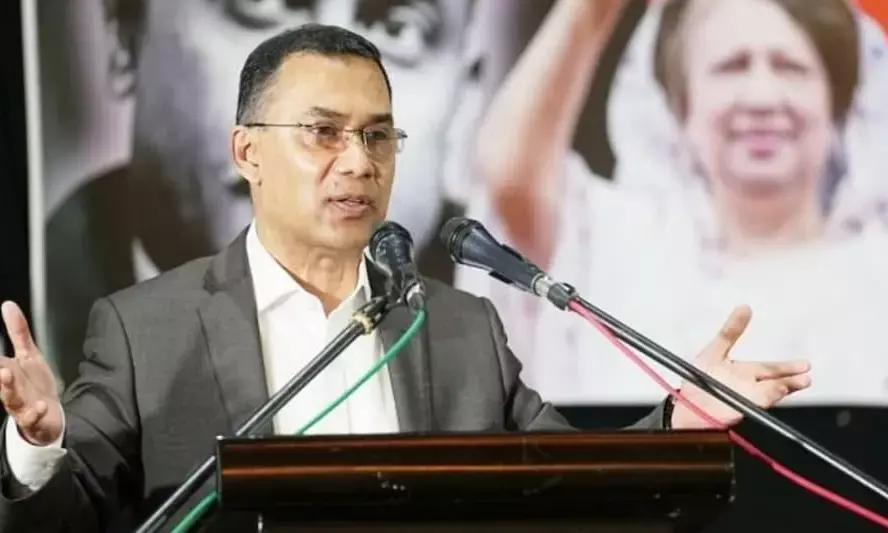
With the general elections in Bangladesh less than six weeks away, the country is in the grip of election fever. The Bangladesh Nationalist Party (BNP) is deeply mourning the passing of Begum Khaleda Zia. Still, at the same time, it has been rejuvenated by the return of Tareque Rahman (Zia) and his assumption of the party’s reins.
The forthcoming polls differ from previous elections because, alongside choosing which party or coalition will form the next government, citizens will also vote in a referendum on the “July Charter.”
The Charter, an outcome of the 2024 uprising, seeks to:
(a) recognise the July 2024 uprising as a democratic revolution, and
(b) overhaul the governance system—including the judiciary, elections, public administration, and anti-corruption bodies.
It aims to foster anti-fascism, democratic resurgence, and inclusive politics, and to ensure that future governments strictly adhere to the Constitution and eschew authoritarianism.
While the Charter’s guiding ideals are unassailable, its implementation may prove difficult. For one, it is alleged that the students, who were the grassroots drivers of the uprising, were excluded from drafting the document. Secondly, not all political parties support it in full. Disagreements existed even before it was drafted, and more divergence of opinion may surface when implementation is taken up.
Turning to the general elections, all indications suggest that the BNP – Bangladesh’s largest political party after the banning of the Awami League – with its vast grassroots base, will perform strongly. Many independent observers believe that if the elections are free and fair, the BNP is positioned to sweep the polls.
The BNP currently leads an alliance of smaller parties under the banner of BNP+, also called the Nationalist Like-minded Alliance. Formed after the dissolution of the earlier 20-party alliance in 2022, the BNP+ bloc is markedly different from its predecessor, particularly because the BNP severed ties with its long-time ally Jamaat-e-Islami in August 2025. Among the parties currently in BNP+ are the Bangladesh Jatiya Party (BJP) and nine smaller parties, mostly centrist, left of centre, or moderate Islamist in orientation.
These partners lack significant nationwide presence but wield influence in certain regions, making them potentially useful in close contests. The Bangladesh Jatiya Party, for instance, remains strong in the Rangpur region.
Jamaat-e-Islami, the most prominent face of political Islam in Bangladesh, is a cadre-based organisation with a loyal ideological following. Its structure is well organised, and its student wing, Islami Chhatra Shibir, is known for both academic excellence and a reputation for street mobilisation—even violent confrontation when required.
Outside observers often lump all Islamist parties together under Jamaat’s umbrella, but this is inaccurate. Entrenched ideological differences exist between groups such as Jamaat and Islami Andolan Bangladesh (IAB). Jamaat and several others participate in elections and present themselves as reformists without compromising on their core objective of establishing a Sharia-based order.
The IAB and its allies, on the other hand, reject the existing politico-social order as “savage and uncivilised” and seek to build a purely Islamic, welfare-oriented Bangladesh modelled on the Khilafat.
Attempts to unite the Islamist parties have seen sporadic success but have repeatedly failed due to doctrinal differences and mutual mistrust. After the fall of the Awami League, fresh talks were held to forge an electoral alliance, but these too faltered when the IAB’s Ameer formed a four-party Liaison Committee with Nezame Islam Party, Bangladesh Khelafat Majlis, and Khelafat Majlis—excluding Jamaat. Qawmi madrasa leaders and Hefazat-e-Islam also have longstanding doctrinal disagreements with Jamaat.
Nonetheless, it remains entirely possible that some of these parties may coalesce as the election approaches. If they do, the alliance will likely be driven by the smaller parties’ need for political survival and seat bargaining, rather than any genuine resolution of ideological differences.
The National Citizens’ Party (NCP), founded by student and youth leaders of the July uprising, and the Liberal Democratic Party (LDP), founded by Col. Oli Ahmed and former President Badruddoza Chowdhury, have joined the Jamaat-led alliance. Since Jamaat’s earlier eight-party alliance has not been formally dissolved, the bloc now effectively constitutes a 10-party alliance.
The Jamaat-NCP alignment marks a significant pre-election realignment. It also underscores deepening questions over ideology, credibility, and unity within newer political formations. Many observers believe that the NCP—initially a genuine, student-driven reform movement—has compromised its founding principles by joining hands with Jamaat. Consequently, several prominent original members who were committed to its reformist agenda feel sidelined and have left the party in protest.
Electorally, neither the NCP nor the LDP adds much to Jamaat’s strength. But whatever influence they possess may help broaden Jamaat’s reach beyond its core constituency. Anyway, most observers believe that Jamaat and its allies would come a close second to the BNP at the polls.
Although India has consistently maintained that elections are an internal matter of Bangladesh and that the people of Bangladesh alone must choose their representatives, no election in Bangladesh—national or local—passes without speculation about India’s role. The umbilical historical, cultural, and geopolitical ties between the two countries perhaps make this inevitable.
However, as External Affairs Minister S. Jaishankar said in Dhaka recently, while attending Begum Khaleda Zia’s funeral: India wishes Bangladesh well ahead of the polls, and hopes neighbourly ties will grow stronger once the situation stabilises after the elections.
Sandip Mitra retired from the Indian Foreign Service. The views expressed here are the writer’s own.