

- >>
- OPINION
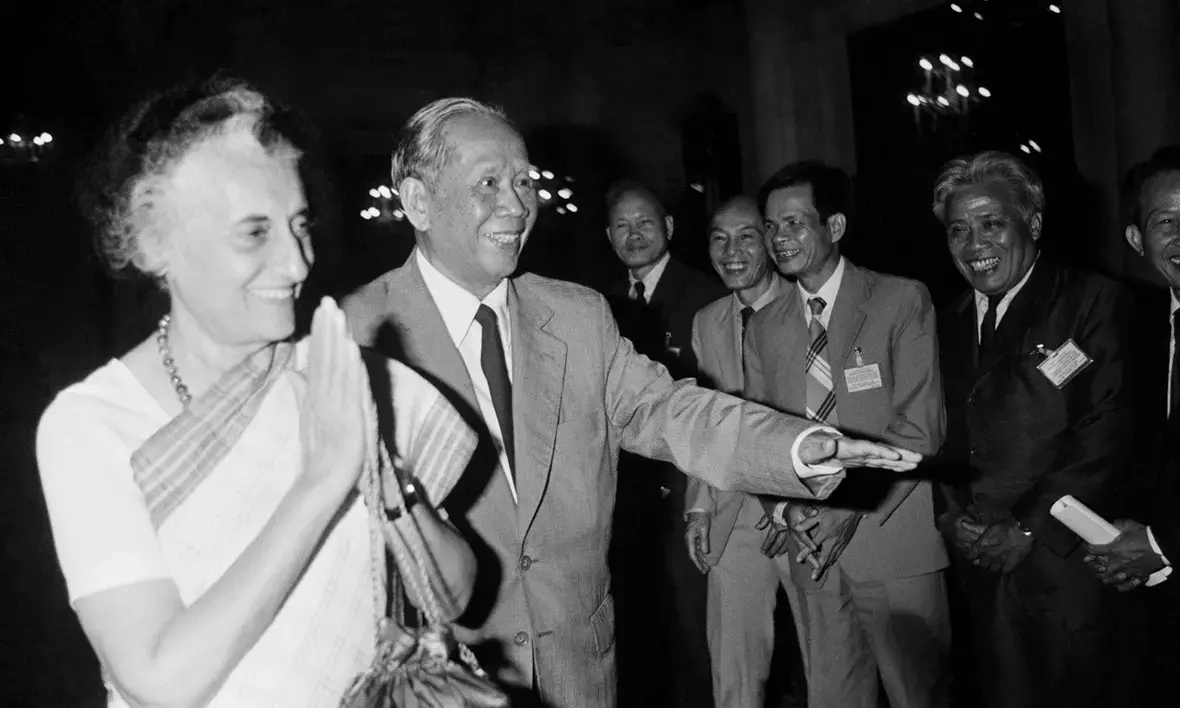
On the morning of 31 October 1984, the routine proceedings at the Indian Embassy in Hanoi were abruptly disrupted when reports began to circulate through foreign sources about the assassination of Prime Minister Indira Gandhi.
At that time, communication between the Embassy in Hanoi and New Delhi was limited to wireless telex machines and unreliable landlines. No official confirmation was immediately available from South Block. The Ambassador, therefore, instructed that the Embassy’s wireless equipment be tuned continuously to All India Radio’s internal broadcasts. For some time, there was no announcement; eventually, confirmation of the tragic news arrived, along with necessary instructions from headquarters.
The Embassy at once went into a state of controlled activity. Consultations were held with the Protocol Department of the Vietnamese Foreign Office, and the diplomatic community in Hanoi was informed of the arrangements being made to open a Condolence Book at the Ambassador’s Residence.
Shortly thereafter, the Vietnamese authorities conveyed that the country’s three principal leaders — Le Duan, General Secretary of the Communist Party of Vietnam; Truong Chinh, President; and Pham Van Dong, Prime Minister — would be the first to visit the Indian Embassy to sign the Condolence Book, followed by ministers, senior officials, and members of the public.
Only half a day was available to complete the preparations. While most arrangements were completed smoothly, two unforeseen difficulties arose. First, despite an extensive search supervised by the Ambassador, an unused Condolence Book could not be located. Responding to our urgent request, the Embassy of a friendly country provided one, which was promptly covered and affixed with India’s emblem.
The second difficulty was more mundane: few among us possessed a black tie, an indispensable mark of mourning. This too was resolved through some quick improvisation by a resourceful senior colleague.
When the arrangements were complete, the three Vietnamese leaders arrived together, dressed in formal tunics. The ceremony that followed was simple yet deeply moving. They placed floral wreaths before Indira Gandhi’s portrait, recorded their messages, and signed the Condolence Book. Then, overcome with emotion, they turned towards the Ambassador. With tears streaming down their faces, the three men — revolutionary leaders who had guided Vietnam through decades of struggle — clasped the Ambassador’s shoulders and wept openly.
It was an extraordinary and unforgettable scene, testifying to the deep regard in which Indira Gandhi was held in Vietnam.
Before departing, Prime Minister Pham Van Dong expressed his wish to personally call on the Ambassador after the period of mourning. Surprised by this departure from established diplomatic convention, the Ambassador later sought confirmation from the Prime Minister’s office, which reaffirmed that the visit would indeed take place.
Over the next two days, a continuous stream of mourners — ministers, officials, party leaders, and ordinary citizens — came to the Ambassador’s Residence to pay homage. The floral tributes soon covered the lawns. So many people came to sign the Condolence Book that two additional books had to be used.
Among the visitors, one incident remains particularly vivid. A Vietnamese woman, visibly moved, wrote a page-and-a-half-long tribute in Vietnamese, and wept inconsolably as she did so. Her grief was mirrored by many others, reflecting the genuine affection that the people of Vietnam felt for the Indian leader.
Meanwhile, as news of the assassination spread, reports began to arrive about widespread violence in India targeting members of the Sikh community. A visiting Sikh official from India was advised to postpone his return until the situation in the country stabilised.
The popular reaction in Hanoi, however, took a somewhat curious form. Indians were easily recognised on the streets, and many Vietnamese, seeking to express sympathy, would stop and mime firing a gun while saying: “Ali Baba – Indira Gandhi boom boom boom. Ali Baba kham tot (bad).”
Puzzled by the reference to “Ali Baba,” we later learned that the Hindi film Ali Baba and the Forty Thieves had recently been screened in several Hanoi cinemas and had become extremely popular. Since the character Ali Baba wore a turban, the local populace associated turbans with that image — hence their use of the phrase “Ali Baba” to refer to the Sikh assassins.
At the time, one of our Sikh colleagues was hospitalised with malaria. Though the news broadcasts were in Vietnamese and Russian, he soon learned of the assassination. When we visited him, he was distraught, declaring that the act was a sacrilege and wholly contrary to the teachings of the Guru Granth Sahib. We reassured him that our visit was purely out of concern for his well-being.
A few days later, in keeping with his earlier assurance, Prime Minister Pham Van Dong visited the Ambassador’s Residence for a private conversation. When the Ambassador remarked that his visit would attract attention in diplomatic circles, the Prime Minister replied with characteristic candour, “That is my intention. We want everyone to know that India is a special friend.”
During their discussion, the Prime Minister reminisced about the close relationship between Ho Chi Minh and Jawaharlal Nehru, as well as his own interactions with both Nehru and Indira Gandhi. He spoke with deep affection, saying that he regarded Mrs Gandhi as a daughter and that her empathy for Vietnam had been evident on many occasions. Before leaving, he requested that his personal condolences be conveyed to her bereaved family.
Indira Gandhi’s assassination evoked profound grief both in India and abroad. In Vietnam, the response of the leadership and the people alike reflected not merely sympathy for India’s loss but also an enduring sense of solidarity forged through shared struggles for independence and national dignity. For those of us who witnessed those moments at the Indian Embassy in Hanoi, the memory endures as a lasting reminder of the respect Indira Gandhi commanded beyond Indian shores – even as she courted great political controversy at home.
Sandip Mitra retired from the Indian Foreign Service. The views expressed here are the writer’s own.