

- >>
- OPINION
China’s Dam on the Brahmaputra River
India must make power generation a priority
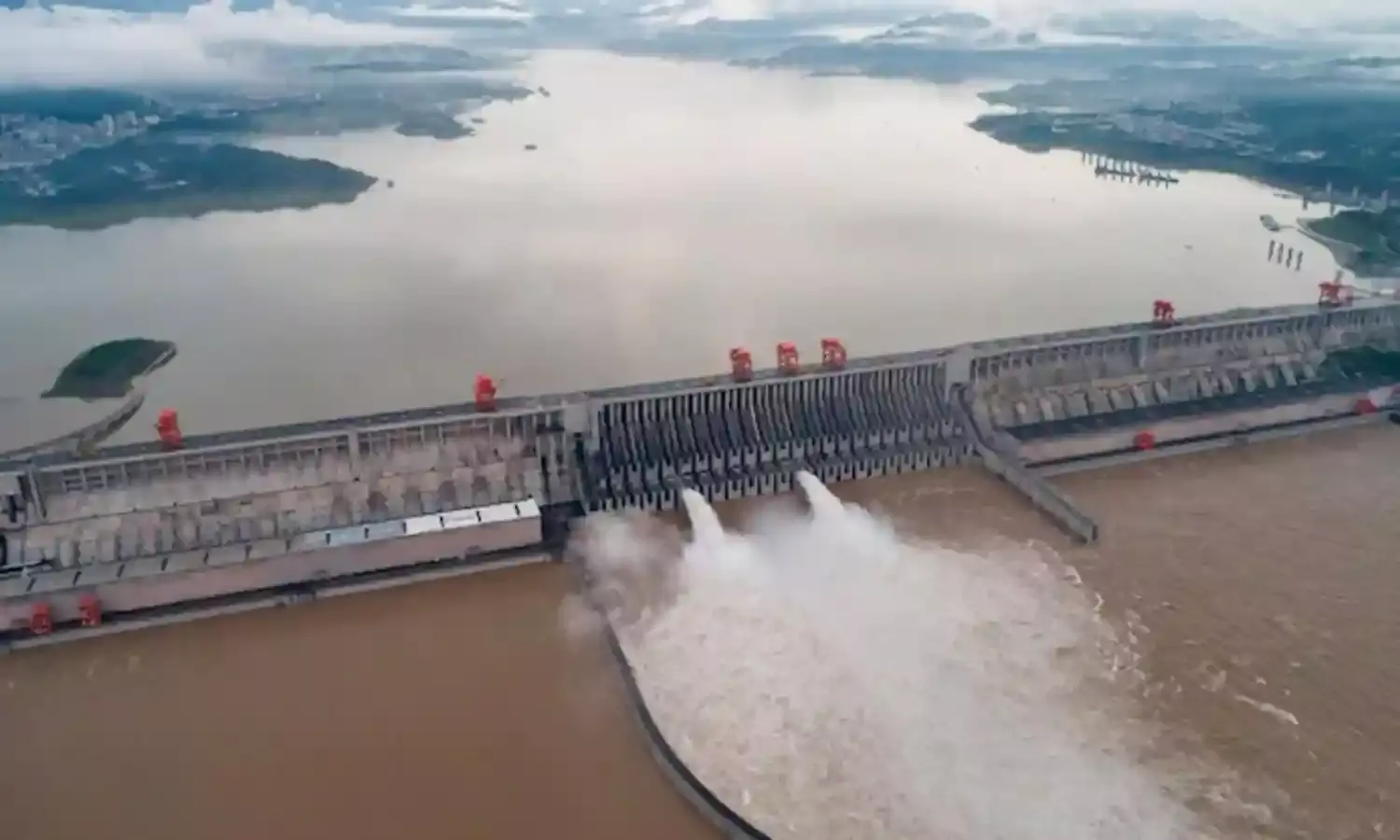
China has the largest number of dams in the World. The new Dam that it has now started building on Brahmaputra river ( known as Tarlung Zangbhas in Tibet and as Jamuna in Bangladesh) will be bigger than the Three Gorges Dam and will be the biggest Dam in the World.
Its cost is expected to be more than $160 billion. It is just upstream of the ‘Great Bend’ this river takes before entering India.
The news of the construction of this Dam has caught the headlines in many Indian newspapers. Some have tried to link this development to the Pahalgham terrorist attack and consequent threat by India, of putting Indus Water Treaty ( IWT ) on hold.
Some others have noted that if India abrogates IWT then Pakistan will call upon China to flood Arunachal Pradesh and Assam. Some of the media has also called this dam a ‘water bomb,’ which China, in the event of a conflict, can use against India.
China’s plan to build this dam on Brahmaputra, upstream of the Great Bend, and just before this river enters India, has been there for quite some time. It is planned to be a storage dam with the sole purpose of generating electricity.
Such dams where the purpose is to merely generate electricity have to be of the storage type, so that the flow of water downstream of the dam remains even throughout the year. ( both during the rainy and dry seasons ). This is so because all the turbines which generate electricity can work throughout the year.
Thus under normal circumstances it will greatly benefit India as there will be no floods during the rainy season and no shortage of water during the dry season. However, when all the water is released from such a dam it results in devastating floods in the downstream areas. For this very reason Pakistan insisted that India’s Salal Dam on Chanab river be converted from Storage Dam to Run of the River Dam. ( in conformity with the Indus Water Treaty )
As per international convention if a lower riparian state has some project on a river then the upper riparian country cannot build any dam or project. On the same river, which can have adverse impact on the project of the lower riparian state. In India’s case there is no project or dam on the Brahmaputra river. Thus India cannot raise any objection concerning the dam that China is currently building on this river.
In the fifties India, using nuclear explosions, was to build an earthen dam on this river, at a location approximately 80 kilometers downstream of the point where this river enters India and about 35 kilometers upstream of a place called Pasighat. This was to be built with the help of the USSR.
Nuclear explosions were to be used to shift a complete hill side. Tunnels for this purpose were prepared but the project, for some unknown reason, came to a halt and since then has remained so. Though it is said that with the construction of this dam, the then chief minister’s land in Along would be submerged, so the project was aborted.
China’s dam on this river, in peace time, will benefit India. It is only in the event of a conflict with India that it can be used to completely flood Arunachal and parts of Assam. What needs to be noted is that such floods will completely devastate Bangladesh.
So this threat to India can manifest only if China wants to inflict this heavy damage on Bangladesh as well. China has economic and strategic interests in Bangladesh besides an important naval port, giving it a viable foothold in the Bay of Bengal.
India on its part must go ahead and build a proper dam on this river at the same location where a dam was to be built earlier, with the use of nuclear explosions.. This dam too has to be of storage class. Abundant electricity will be produced from it, which will meet the complete requirements of Arunachal Pradesh and Assam. To create jobs in these states, there is a need to set up industries which this project can support by supplying adequate electricity at cheap rates.
The risk of China , in the event of a conflict, flooding the states of Arunachal Pradesh and Assam can be mitigated by having a system to empty out this proposed Indian dam, as soon as a conflict with that country surfaces.
Thereafter the flow of water from China’s dam can be regulated, using the capacity of this Indian dam plus releasing only as much water as does not flood downstream areas in Arunachal Pradesh and Assam. If required an early warning system can be installed close to the border to deal with any surprise action of releasing water by China, from the Dam that it is now building. .
There is also a point of view being projected that this very heavy load of water off this Dam that China is building may result in shifting of the Tectonic plates in this region, resulting in earthquakes and its consequent impact on this dam and on the surrounding areas..
China’s push for building more and more dams is to meet its ever increasing demand for electricity, which at present has reached 3.35 TW. Still the demand is growing at 6.5% annually, driven by the demand for industrial electrification within China.
A massive drive is on to generate clean energy through solar, wind, hydel and nuclear power plants. Hydroelectric projects alone are expected to generate 368 GW of electricity. More and more work on Artificial Intelligence ( A I ) will lead to ever increasing demand for electricity,
Unfortunately in India everything moves rather slowly, if at all. The ShapurKandi project on Ravi river was planned to be started in 1949 but was delayed inordinately, and is still under construction. All these years a good quantity of water from this river has been flowing down to Pakistan.
Sluice gates to arrest flow of water at various projects on Beas and Satluj rivers have been overdue for replacement, with the result that some of the water from these rivers has been flowing down to Pakistan. While there is much shortage of water for irrigation in Punjab and Haryana.
There have been no concerted efforts to fully meet the ever increasing demand for electricity in India. It has not exploited the full potential for generating electricity fromthe innumerable rivers that flow from the Himalayas. Nor has the full potential to generate electricity through solar, wind and nuclear power plants been adequately exploited. Electricity can also be produced by installing suitably designed turbines in canals where the flow of water is fast enough. Such contraptions can be installed at gaps of 100 meters or so.
There is an ever increasing requirement of electric power for the country. This demand has been most compelling. Energy security is of critical strategic importance for India and necessary steps to meet this pressing requirement must be accorded the highest priority
Lt General Harwant Singh is an Army veteran. The views expressed here are the writer’s own.