

- >>
- OPINION
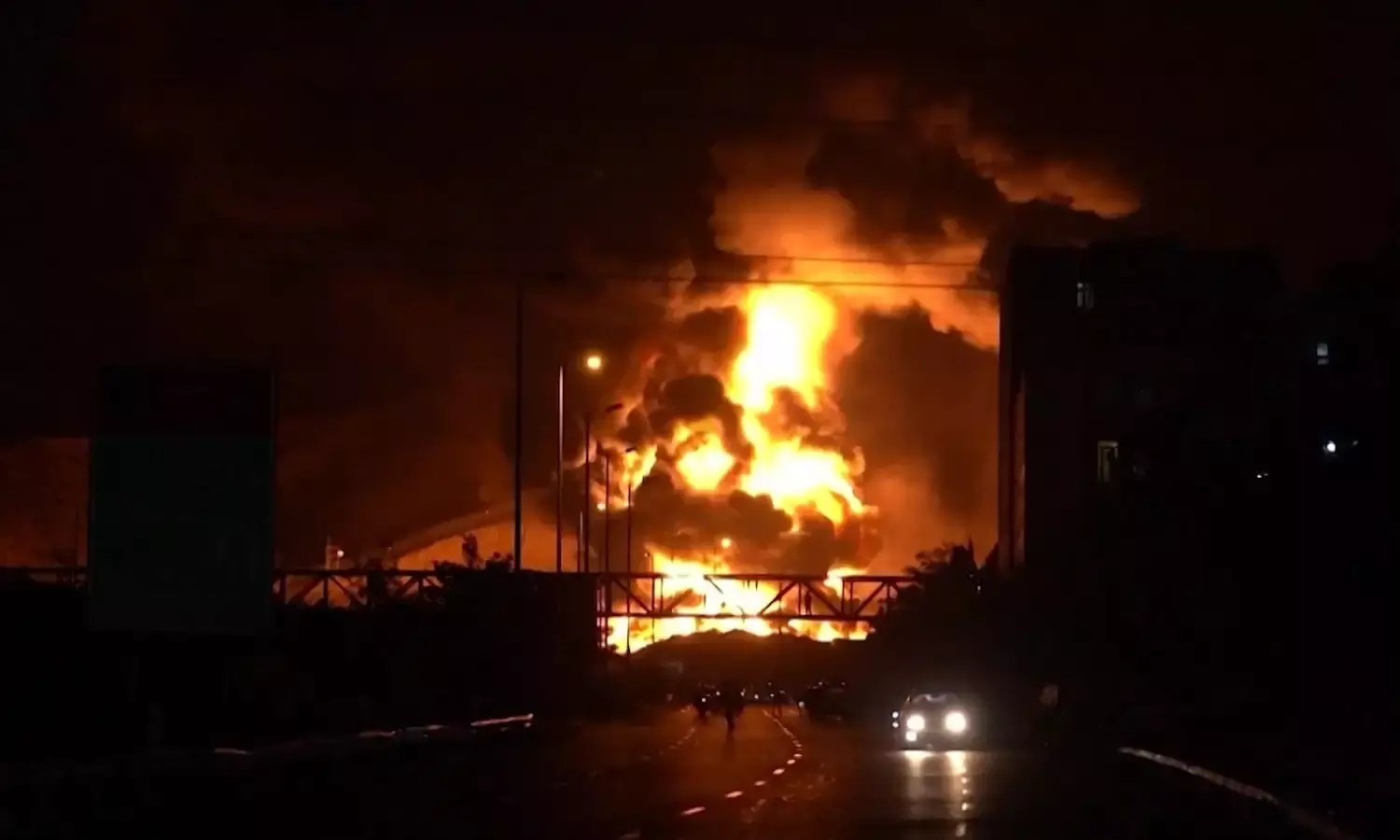
On the morning of July 2, 2020, an explosion tore through Iran's Natanz nuclear enrichment facility, shattering centrifuge halls and setting back the country's nuclear programme by what experts estimate to be at least a year.
Iranian officials called it sabotage. Israeli media, operating under the usual veil of ambiguity, hinted at Mossad involvement.
For seasoned observers, the message was clear: this was not a new story, but a familiar one. Nearly four decades earlier, on June 7, 1981, Israeli fighter jets had demolished Iraq's Osirak nuclear reactor outside Baghdad in Operation Opera.
The doctrine was the same. The difference was in the delivery.
Israel has long pursued a consistent, pre-emptive strategy to deny hostile regimes the capacity to develop nuclear weapons. In Iraq, the method was a one-off surgical airstrike. In Iran, it has been a years-long covert war: assassinations, cyber sabotage, insider recruitment, and intelligence theft. The comparison reveals a shift not in Israeli intent, but in tactics, terrain, and the geopolitics of denial.
In 1981, Prime Minister Menachem Begin authorised a surprise air raid on Iraq's Osirak nuclear reactor, built with French assistance and nearing completion. In a post-strike statement, Begin declared: "We shall not allow any enemy to develop weapons of mass destruction against the people of Israel. Never again."
The operation, codenamed Operation Opera, involved eight F-16 fighter jets flying more than 1,000 kilometres across Jordanian and Saudi airspace. They dropped 16 bombs on the Osirak facility, destroying the reactor before it became operational.
The success of Operation Opera also raised another question: how did Israeli jets cross Jordanian and Saudi airspace undetected or unchallenged? The truth remains murky, but analysts widely believe both countries quietly acquiesced.
Jordan, caught between hostile neighbours and dependent on Western support, issued only a token protest. As for Saudi Arabia, its rivalry with Saddam Hussein was already intensifying. While Riyadh never acknowledged cooperation, it had no incentive to intercept aircraft heading to degrade a future threat.
Four decades later, similar regional calculations arguably enabled Israeli access to Iranian airspace — with Gulf states viewing Tehran, not Tel Aviv, as the greater danger. The raid took only a few minutes, and all Israeli jets returned safely.
But the airstrike was only one part of a broader campaign. In the months before and after Operation Opera, several individuals linked to Iraq’s nuclear ambitions met violent or suspicious ends — many of them far from the Middle East.
In June 1980, Dr. Yahya El-Meshad, an Egyptian nuclear physicist coordinating Iraq’s nuclear fuel arrangements with France, was found bludgeoned to death in his Paris hotel room. He had been due to inspect enriched uranium destined for the Osirak reactor. French police found signs of a violent struggle, but no valuables were taken. The murder remains officially unsolved, but intelligence circles universally suspect Mossad.
Around the same time, a French technician was killed in an explosion at the port of La Seyne-sur-Mer while handling components meant for Osirak. While dismissed publicly as an accident, the incident deepened fears among those involved in Franco-Iraqi nuclear cooperation.
There were also whispers of Iraqi scientists dying in unexplained car crashes or accidents, both in Iraq and abroad — a pattern suggesting a shadow campaign of silent elimination. Though names remain scarce and attribution impossible, the cumulative effect was clear: assisting Iraq’s nuclear programme carried mortal risk, even on European soil.
The message was chilling and effective: no scientist, no matter how far from Baghdad, was beyond reach.
At the time, the strike on Osirak was widely condemned. The United Nations Security Council passed Resolution 487 unanimously, calling it a violation of international law. Even the Reagan administration expressed disapproval. Yet, within a decade, as Saddam Hussein invaded Kuwait and the Gulf War unfolded, many quietly revised their opinions. The Osirak strike was retroactively praised for preventing Saddam from acquiring nuclear weapons before the 1991 Gulf War.
Yet not all Iraqi experts agreed with that narrative. Khidhir Hamza, a senior Iraqi nuclear scientist who later defected, stated: "The Israeli raid set back the programme, yes, but Saddam rebuilt it in secret. What really ended it was the 1991 Gulf War and UNSCOM (the United Nations Special Commission, established to verify the destruction of Iraq's weapons of mass destruction and prevent their reconstitution). But Osirak was a wake-up call — not just for Iraq but for every country in the region."
Imad Khadduri, a former atomic physicist with Iraq's Atomic Energy Commission, offered a different critique: "Osirak wasn't a bomb factory. It was a symbolic strike. It delayed, but didn't destroy.”
Indeed, most international assessments now agree that Iraq was nowhere near building a functional nuclear weapon in 1981, a conclusion reinforced by post-Gulf War inspections. The threat was political and potential, not immediate.
Former IAEA official Olli Heinonen would later reflect, "Osirak was destroyed before it became hot. It eliminated a major proliferation threat in the region."
The lesson was clear: act before the threat becomes unmanageable.
What worked in Iraq would not work in Iran. Tehran's nuclear programme is decentralised, buried, and resilient. Unlike Osirak, Iran's facilities are dispersed: Natanz and Fordow for enrichment; Arak for heavy water; Esfahan for conversion; Parchin for weaponisation research. Some are dug deep into mountains, protected by concrete, and surrounded by air defences.
The first major disclosures came not from satellites but from Iranian exiles. In 2002, the National Council of Resistance of Iran (NCRI) revealed the existence of Natanz and Arak. As NCRI deputy director Alireza Jafarzadeh said at the time, "What we exposed in 2002 was only the tip of the iceberg. The regime’s strategy has always been to conceal key sites and deny military dimensions." Western intelligence agencies scrambled to catch up. A decade later, Israel took matters into its own hands.
Between 2007 and 2012, five Iranian nuclear scientists were assassinated in Tehran. The most prominent, Dr. Majid Shahriari and Dr. Masoud Alimohammadi, were killed by motorbike bombs. In 2010, the Stuxnet virus, reportedly a joint U.S.-Israeli creation, disabled thousands of centrifuges at Natanz. Iranian officials blamed "foreign intelligence services." Western analysts did not dispute it.
David Albright of the Institute for Science and International Security noted at the time, "What we’re seeing is a targeted campaign to delay, if not derail, Iran’s nuclear capabilities. It's sabotage without war."
At the centre of Iran’s suspected weaponisation programme stood Mohsen Fakhrizadeh, a shadowy figure described by Israeli officials as the "father of the Iranian bomb." A former IRGC brigadier general — the IRGC being Iran’s powerful Islamic Revolutionary Guard Corps, which oversees much of the country’s military and clandestine nuclear activity — Fakhrizadeh was named in IAEA reports and likened by some to Pakistan’s A.Q. Khan.
In November 2020, he was assassinated in broad daylight outside Tehran. Iranian media offered conflicting accounts: a remote-controlled machine gun, a satellite-linked attack, a team of Israeli agents. Whatever the truth, the operation bore the hallmarks of high-level foreign planning.
Olli Heinonen again commented: "Fakhrizadeh’s death is a psychological blow to the programme. It removes technical leadership and sends a warning: no one is beyond reach." Mehdi Khalaji, a former Qom seminarian and now a scholar at the Washington Institute, added: "Fakhrizadeh was not just a scientist. He was part of the IRGC’s ideological vision: science as power, nuclear knowledge as deterrence. His death hit that doctrine hard."
In 2018, Mossad agents reportedly broke into a Tehran warehouse and stole half a ton of nuclear documents. Prime Minister Benjamin Netanyahu later displayed the haul on live television: binders of plans, CDs, photographs, schematics. "Iran lied. Big time," he declared.
Western intelligence officials confirmed the documents were authentic. They revealed ongoing research well after 2003, despite Iran’s denials. The operation was a triumph not just of espionage but of narrative control. It helped reframe Iran as deceptive, even as JCPOA (Joint Comprehensive Plan of Action) signatories — the U.S., U.K., France, China, Russia, Germany, and the EU — tried to keep the 2015 nuclear deal alive. The JCPOA placed strict limits on Iran’s enrichment levels, centrifuge numbers, and stockpile size in return for sanctions relief, though the U.S. withdrew in 2018 under President Trump.
Mark Fitzpatrick, a former U.S. State Department non-proliferation expert, observed: "The archive showed Iran retained bomb-related knowledge in retrievable form. It proved intent, if not imminent action."
Iraq’s programme was fragile, centralised, and externally dependent. Iran is nationalised, layered, and far more politically entrenched. While the Osirak strike solved a problem overnight, Iran has absorbed Israel’s blows and adapted.
Iran now uses advanced centrifuges, buries facilities deeper, and relies less on foreign components. As Hassan Dai, an Iranian-American journalist in exile, put it: "The regime turned nuclear capability into a national mythology. Not to build a bomb immediately, but to show they could — and that’s what terrifies Israel." Its nuclear ambition is entwined with national pride, as expressed by Supreme Leader Ali Khamenei in 2019: "We do not seek nuclear weapons. But if we did, no power could stop us."
The Israeli approach — surgical in Iraq, systemic in Iran — reflects both necessity and evolution. But it is not clear if the same success is achievable. Assassinations slow down programmes; they do not erase knowledge. Cyberwar can delay timelines; it cannot eliminate intent.
Israel's campaign against Iran is unprecedented in scope and duration. It has bought time, inflicted setbacks, and exposed Tehran’s secrecy. But unlike Osirak, there is no finality — only a managed escalation.
The shadow war continues: in explosions, drone strikes, and diplomatic feints. Both countries play for time. And the bomb, still undeclared, still unborn, remains at the centre of it all.
As one former Israeli intelligence officer put it, off the record: "We’re not trying to win. Just to make sure they never do."
Shyam Bhatia writes on foreign affairs. He is the author of Nuclear Rivals in the Middle East, published by Routledge. The views expressed here are the writer’s own.