

- >>
- OPINION
Gaps In The Military Officers Selection Process
Limitations of methodology and coaching centres
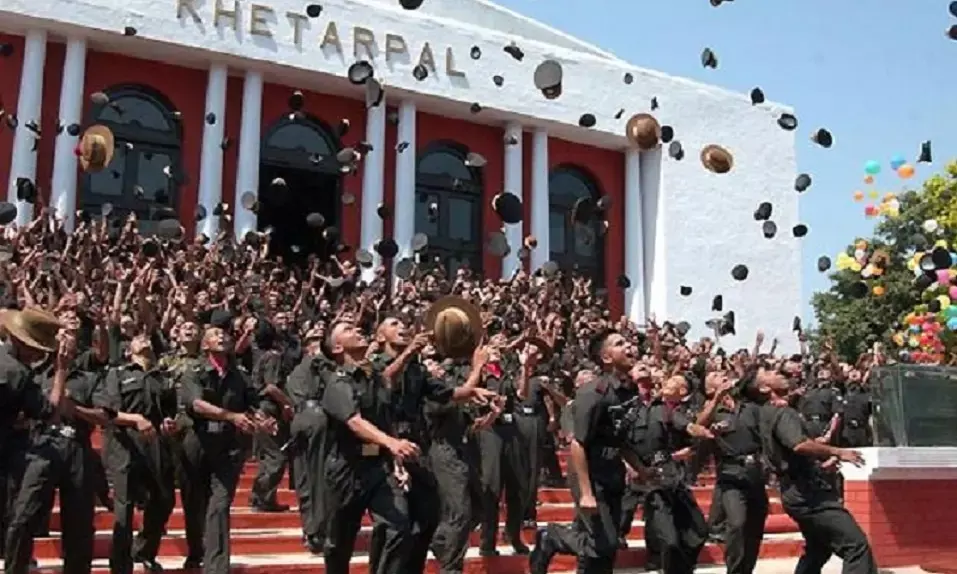
In serving the nation during crises situations of various kinds, our Armed Forces have stood the test of time by coming out with flying colours through their dedicated performance. The leadership provided by the officers in our military has always been exemplary and provides the foundation to how the unit functions.
Intermittently however, cases of mis-conduct on part of military officers come to light; aptly viewed as aberrations. Few such examples in the recent past are death of two cadets at the National Defence Academy (NDA) in the month of October 25 by alleged suicide and the dismissal of an officer on the charges of ‘refusal to attend the religious functions of the troops', a normative practice for the officers towards upholding the cohesion and integrity of the outfit being led.
The larger question that deserves attention is, ‘have the Psychologists at the Services Selection Boards (SSB) erred in their assessment?’.
The cases flagged have triggered concern and widespread media commentary by analysts and veterans. While endeavouring to address the roots of the challenge, few analysts suggest that certain behavioural tendencies may not have been detected and escaped verification during the selection process by the military's SSB.
It is brought out that all the convenient nuances put forth in the open domain overlook the systemic aspects embedded within the selection system. As someone who has assessed candidates, trained troops, and studied the SSB process closely for decades, one can state confidently that the current public narrative is misplaced and misleading.
The SSB system cannot identify deeply buried or consciously suppressed pathological traits unless these reveal themselves through behaviour. The psychological tests as part of SSB procedure are designed to bring out subconscious tendencies, but only to the extent that the candidate allows them to surface. A highly coached and practised candidate can rehearse, conceal, fake and manage undesirable thoughts effectively.
In this regard, the plethora of coaching institutes involved in the business of training aspiring girls and boys are to be blamed.
This is not a failure of the psychologist, but is a limitation of the methodology itself. Holding the Interviewing Officer (IO) or the Group Task Officer (GTO) responsible for something the tools were never designed to detect is unfair and intellectually dishonest. It also distracts the policy makers away from the structural weaknesses that deserve attention.
There are systemic gaps in this regard that need to be acknowledged and addressed accordingly. Candidates get recommended even when two out of three assessors find them inadequate and only one assessor marks them as average.
This practice violates the very foundation of the SSB model, which rests on convergence across three independent assessments: by the Psychologist, the IO and the GTO. Officer-like Qualities (OLQs) that are mandatory criteria for selection are rendered meaningless, if not graded consistently across all the three assessors.
A candidate rejected by two specialists should never enter a military academy. Even if the percentage of such cases is small, the consequences are profound because every such exception dilutes the quality of leadership in the armed forces. This is at the basis of unsuitable candidates slipping through the system.
There is another uncomfortable truth that requires attention. Some Board Presidents, though well-intentioned, have been known to influence or guide assessors to be soft, give the benefit of doubt, or to look for positive indicators where none exist.
The President’s role is to ensure fairness of procedure, not to interfere with or reshape the professional judgment of the assessors - Psychologists, GTOs, or IOs. When Board Presidents intrude into technical assessments, the independence of each technique collapses and the entire philosophy of three parallel and unbiased evaluations is undermined. Until these core issues as brought above are addressed, the attempted reforms will remain cosmetic and ineffective.
If the armed forces in particular are serious about preventing future tragedies, they must restore the integrity of the original SSB design. The design requires to be strengthened by ensuring unanimity amongst assessors, protecting their autonomy in face of any influence, modernising the screening system through adoption of modern technology, and creating formal accountability for procedural deviations.
The SSB, when applied in its authentic and disciplined form, is a robust, time-tested and fair selection model. What has failed over the years is not the concept, but the manner in which it has been allowed to drift away from its principles. Defence Institute of Psychological Research (DIPR) under DRDO, which is the responsible organisation of training the assessors and researching on selection methodologies required to carry out an audit of the prevalent system and conceptualise course correction.
The nation and its armed forces deserve a selection system that upholds its founding philosophy. The tragedies should not be used to push superficial and comforting narratives. Only by confronting the structural weaknesses, can we protect the quality of leadership that India’s military deserves, towards fulfilling the national cause.
Colonel DK Rawal is an Infantry veteran who has served as GTO with a selection centre responsible for selecting officers for the Indian Army.
Colonel Shashank Ranjan is an Infantry veteran presently teaching at OP Jindal Global University, Sonepat, Haryana
The views expressed here are the writers own.