

- >>
- OPINION
Phase 2 of Trump’s Gaza Plan Further Liquidates Rights
Israel continues to kill with impunity
US President Donald Trump has announced the formation of a "Peace Council" that, according to his plan to end the war in Gaza, is supposed to oversee the administration of the Palestinian territory.
This announcement comes two days after the formation of a 15-member Palestinian committee to administer the Gaza Strip after the war.
This marks the entry into the second phase of the ceasefire agreement between Israel and the resistance movements in Gaza (which went into effect on October 10, 2025).
According to Trump's plan, this phase stipulates that "Gaza will be governed by a temporary transitional authority, a technocratic and non-partisan Palestinian committee responsible for running the daily public and municipal services for the residents of Gaza," under the "supervision and oversight of a new international transitional body called the Peace Council, which will be chaired by President Donald Trump." The council, announced yesterday, includes representatives from the United Kingdom, Qatar, UAE, Egypt, Turkey, AND Israel.
The American plan also includes deploying a so-called international stabilization force in the Gaza Strip to monitor the border with Israel and train Palestinian police units to maintain security. According to Trump, this requires a "comprehensive agreement with Hamas for disarmament" and the "dismantling of all tunnels."
The first phase of the ceasefire agreement stipulates a cessation of all military operations in the Gaza Strip, an Israeli withdrawal from populated areas, and a prisoner exchange with Palestinian detainees. However, reality on the ground tells a different, albeit grim, story!
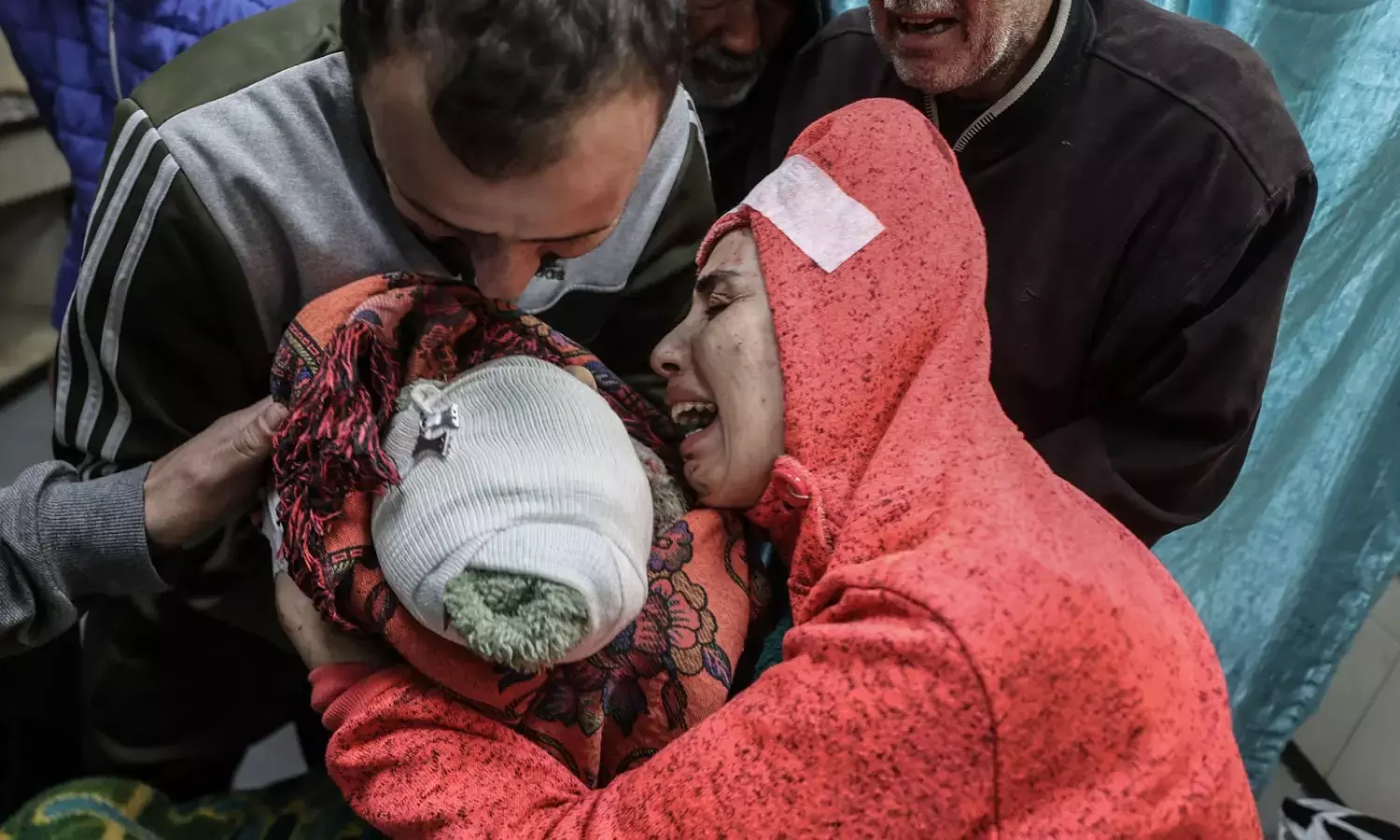
Genocidal Israel drops massive bombs on Gaza from the sky almost daily. These bombs have killed 451 civilians during the “ceasefire” alone. Apartheid Israel has also prevented the reopening of the Rafah border crossing with Egypt —the only exit Gaza has to the external world. Israel has reduced aid deliveries to less than half their previous levels and banned basic items essential for the survival of Palestinians, such as fuel, meat, livestock, medicine (including anesthetics needed in surgeries), and eggs.
Furthermore, it has prevented international organizations from carrying out their work and refused entry to essential equipment like bulldozers that are needed for clearing rubble and reopening roads.
In addition to Israel's failure to uphold its commitments under the first phase of the ceasefire and its serious violations of the agreement, several other issues will be the subject of fierce negotiations between the Israelis, who are threatening a return to war to "disarm Hamas," and the Palestinians, who, with Arab and international support, are seeking to utilize the ceasefire agreement to revive the path toward an illusory "Palestinian state."
Despite agreeing to relinquish control of the Gaza Strip, Hamas, according to statements by its leaders, insists on retaining its weapons while remaining open to "any proposals that preserve this right while guaranteeing the establishment of a Palestinian state." It also emphasizes that it is a "resistance" movement against Israel, which the United Nations classifies as the "occupying power" in the Palestinian territories.
Israel, on the other hand, seeks to maintain its position of not withdrawing from the Gaza Strip by linking this to the disarmament of Hamas and the formation of the international force that is supposed to be deployed in the areas from which the Israeli army withdraws. It has so far refused to withdraw from the Rafah crossing, using as an excuse that the body of the final Israeli hostage, assumed buried beneath the rubble of Israeli bombs, has not yet been located.
The third obstacle is the absence of an international force in Gaza. At the time of writing in January 2026, foreign troops had not yet been deployed on the ground. This is because Israel strongly opposed Turkey being part of the international force and because a number of countries were reluctant to send their armies into such an environment.
These factors point to ambiguity surrounding the details of the second phase of the Trump plan, including how the spineless Palestinian "technocratic government" that is supposed to administer the Gaza Strip will function under continued Israeli military occupation and constant Israeli bombing of Gaza.
There are also indications that the Israeli army will not withdraw from its "yellow line" area, which occupies 53% (expanded to 63%, according to Haaretz) of the Gaza Strip. There is every sign that Israel will simply continue to occupy this area and maintain its constant bombings of the rest of the Gaza Strip, including areas where it destroyed all buildings and people only remain living in flimsy tents.
Consequently, it is not expected that Hamas will disarm, and the "agreement" will never contradict Israel's policies and plans, including the consolidation of the separation between the Gaza Strip and the West Bank.
Where does that leave Gaza and its people, if not in limbo?
Most critical analysts tend to paint a pessimistic picture in which Israel will continue its plan to ethnically cleanse both the Gaza Strip and the West Bank as long as the international community continues its complicity with Israel’s crimes.
Antonio Gueterrs, UNSCSG, has already tweeted that he” welcomes the start of Phase Two of the ceasefire in Gaza”, ignoring the fact that it’s a one-sided ceasefire while the Israelis continue their genocide unabated.
As the director of the New York office of the United Nations High Commissioner for Human Rights (OHCHR), Craig Mokhaiber put it by welcoming Phase Two of the Trump Place, “the UNSCSG endorses impunity for [the genocide] perpetrators, abandons its victims, ratifies the colonial seizure of the land and the fate of its survivors by the US, calls for the nullification of international law in Palestine, pushes aside decades of findings of the ICJ and the UN human rights mechanisms, and abdicates his role as the depositary of UN norms and standards. The Israel exception to international law is alive and well, thanks to Antonio Guterres.”
Implementing the Trump Plan for Gaza, therefore, is nothing but the antithesis of the Palestinian right to self-determination for which thousands of men, women, and children have sacrificed their lives.
Haidar Eid is a Palestinian scholar from Gaza. The views expressed here are the writer’s own.
Cover Photograph Courtesy Al Jazeera