

- >>
- OPINION
The Curse Of Lazy Stereotyping
Palestine is a moral, not a religious, issue
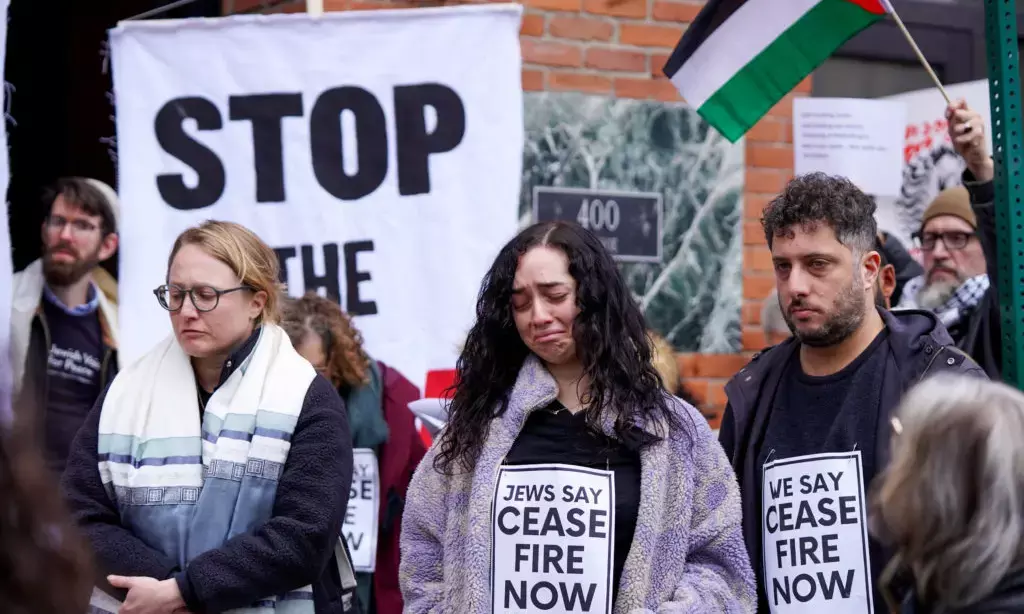
Palestine is a moral problem, not a religious one.
It is fundamentally about illegal occupation, international law, displacement of natives, justice, and legitimate rights. Religious framing of the Palestinian issue is a relatively new phenomenon.
Historically, the Biblical land of Palestine was naturally given to a myriad of faiths and hence the initial Palestine movement was essentially secular with many Christians, Druze to even Jews, standing hand-in-hand with the majority Muslims. Jerusalem does after all host holy sites for the three Abrahamic religions with The Western Wall (Judaism), Church of the Holy Sepulchre (Christianity), and the Al Aqsa Mosque (Islam).
Prominent Christian Palestinians like George Habash (founder of the Popular Front for the Liberation of Palestine), Hanan Ashrawi (spokesperson during the first Intifada), Edward Said (founder of Palestine National Initiative) etc., were once at the forefront of the Palestine freedom struggle. Prominent Druze like Said Nafaa or even Jews like Ilan Pappe, Gideon Levy, Amira Hass etc., have spoken passionately about the State of Palestine.
But overtime, relatively secular organisations like the Palestine Liberation Organisation (PLO) seceded space to Hamas, Palestinian Islamic Jihad, Muslim Brotherhood – and with that the Palestine movement morphed into a religious issue, overtime.
Such oversimplified religious perception strips the Palestine issue of its moral, legal, and human rights dimensions. Also it helps fan the theory of “Pan-Islamism” as a convenient fearmongering tool, even as history and modern reality shows that these Levantine lands have had a multi-cultural, multi-religious, and even multi-ethnic base.
This unfairly reductive phenomenon of “Islam-versus-the rest” has been the bane of framing other countries like Syria, Iran and Iran too – where the dominant narrative outside of the Middle Eastern region tends to posit the problem as one of “Islam-versus-the rest”.
Most do not realise that for all his other ills and failings, Saddam Hussein was personally not a religious bigot as his Baa’th Party had Christians likes of Michel Aflaq, Tariq Aziz etc., Just as deposed Syrian dictator Bashar al-Assad had Druze like Sheikh Youssef Jarbou and Christians like Hammouda Sabbagh in his ranks.
Similarly, even as an unhinged duo of Donald Trump and Benjamin Netanyahu villainize Iran – fact remains, Iran has about 25,000 Jews with nearly 50 functional synagogues and a seat reserved for the Jews in the Majlis (Islamic Consultative Assembly). This is besides the two seats reserved for Armenians and one each for Assyrians and Zoroastrians.
But the “West” will never see, recognise and therefore encourage steps towards secularization as painting the “enemy” as bloodlusting Islamists feeds the divisive stereotype. Whereas, the “West” remains incredibly silent at the undisputable illiberality, intolerance, and un-secularity of its “allies” in Arab Sheikhdoms!
Yet another counterintuitive glimmer of hope from the usual stereotype of the Middle East countries, happened with the cabinet of interim Syrian President, Ahmed al-Sharaa. The former rebel leader who was the leader (emir) of Hayat Tahrir al-Sham (HTS) faction, once affiliated with Al Qaida – was expected to be revisionist, puritanical and exclusivist.
But surprisingly his cabinet includes a Syrian-Canadian woman, Hind Kabawat, as the Minister of Social Affairs and Labour. Not only is she a Christian but also highly educated with a MA in Law and Diplomacy from the Fletcher School of Law and Diplomacy at Tufts University, Law Degree holder, and with further courses in Conflict resolution, strategy and negotiation from Harvard and Toronto Universities. Earlier she was heading the interfaith committee for Tastakel – an organisation dedicated to peace and reconciliation through women’s empowerment and education. Surprisingly born in India, Hind Kabawat’s presence in the Ahmed al-Sharaa’s cabinet without any expected head covering or veil in public life, speaks of an alternate reality in Syria.
Not willing to get caught in becoming a trophy candidate or any form of condescending tokenism, she openly laments the dearth of more women in the transition Syrian cabinet. Unlike many, she has fearlessly accepted that mistakes had happened under her interim cabinet but attributes the same to a learning curve.
She bravely insists, “I am not here for window dressing,” and adds, “I don't feel that I am a Christian or a woman when I do my job. I feel like I am a citizen of Syria... The minute I start feeling like I'm a minority or I'm a woman, I will lose my legitimacy”.
Such candour, sacrifice, and willingness to continue working in Syria even as her dual passport and education can safely take her across continents to safer shores and more affluent opportunities.
Kudos is equally reserved for former-rebel Ahmed al-Sharaa who unexpectedly has traded his rebel fatigues, Sunni-supremacist instincts, and feared vengefulness towards anchorage of rapprochement, inclusivity, and statesmanship. Only time will tell how Ahmed al-Sharaa or Hind Kabawat shape up and hopefully deliver, but it is important to normalise and valourise alternate truths, as opposed to painting the region as a clash of religious fundamentalism.
Because vested powers did not allow the Palestine movement to remain secular and all-inclusive, it ended up hurting the Palestinian cause and allowed the vacuum to be filled up by religious extremist organisations, on the rebound.
Many in the “West” conveniently sided with the Arab Sheikhdoms as they went on to fund religious intolerance and fundamentalism or even partake in sectarian sides (as that suited the West’s narrative of demonizing Iran). No side can truly claim to be aboveboard but care to always laud and encourage fledgling efforts of cohesion between faith, cultures, genders, orientation etc., must be done. Demonising is easy (often convenient) but it should never be pushed to such an extent that it actually breeds small-spirited intolerance.
The Middle East region (especially Palestine) is in a desperate need to heal and move ahead of the lazy stereotypes that have dominated the storyline. The Palestine issue cannot only be seen from the prism of Hamas or even that of the more moderate, Fatah faction. Thus Palestine, Syria or Iran, are not just religious issues but a matter of sovereign dignity, legality, and above all, morality.
There are many powerful motifs of unity, resilience, and human dignity that transcend genders, religions and other divides, if only one chooses to go beyond lazy stereotypes. As the legendary Lebanese singer Fairuz (given the honorific “our ambassador to the skies”) notes in the Arabic song, “Kan Enna Tahoun” (or “We Had a Mill”) i.e., “We lived together, shared the harvest and the bread, Our hearts were one, and our hands worked as one.”
It is important to sometimes recognise people as just simple people, without the additional traps of divisive identities.
Lt General Bhopinder Singh (Retd) is former Lt Governor of Andaman and Nicobar Islands & Puducherry. The views expressed here are the writer’s own.