

- >>
- OPINION
Signing of the India-UK Comprehensive Economic and Trade Agreement (CETA), poised for bilateral trade to over USD 112 billion by 2030, has made headlines.
The 'Vision 2035' roadmap envisages collaboration in defence, technology, and green energy. CETA offers 99% of Indian exports to the UK market, including sectors like textiles, leather goods, marine products, gems and jewellery, and engineering goods.
It aims to boost exports and create more employment. It also eliminates 95% agricultural and processed food exports, as well as eases Indian skilled workers/professionals into 35 UK sectors for up to two years.
Britain gets access to India’s huge market. India’s average tariff on British goods will reduce from 15% to 3%, improving market access for UK exporters of consumer products like cars, cosmetics, soft drinks, and medical devices.
India has halved the tariffs on British export of Scotch whisky (from 150% to 75%), with further reductions to 40% over a decade. India has also reduced tariffs on British automobiles/electric vehicles (EVs) from 110% to 10% under specified quotas.
Tariffs have also been reduced on British medical devices. 11% tariffs on aerospace products are removed entirely, while tariffs on electrical machinery will be halved or eliminated. Also, CETA has comprehensive provisions on services and digital trade, including commitment to streamline customs procedures and reduce technical barriers for faster trade.
British business leaders welcomed signing of the UK-India FTA in the presence of Prime Minister Narendra Modi and Prime Minister Keir Starmer, saying the landmark £4.8bn trade deal will unlock economic growth for each region and nation of the UK. (business-leaders-welcome-the-uk-india-free-trade-agreement).
Equity markets in India went down in immediate aftermath of the signing of the India-UK FTA because of multiple reasons, including: concerns over asset quality in the micro, small, and medium enterprise (MSME) segment spooked investors; investor uncertainty over an interim Indo-US trade deal; India-UK FTA lacked immediate triggers without progress on Indo-US trade negotiations (bloodbath-on-dalal-street-why-the-stock-market-is-down-despite-historic-india-uk).
Brahma Chellaney posted on X: “India, with a domestically driven economy, relies on domestic consumption, not exports, for growth. Its commerce minister said in 2024 that existing FTAs were "hurting" domestic industry. Yet, India has now signed another FTA — handing Britain its biggest trade deal since Brexit (https://www.facebook.com/story.php?story_fbid=10162171593009775&id=674879774&rdid=t6qQScPEuBuz4SKK#).
If Piyush Goyal referred to the EU linking the environment to FTA in 2024, 'Vision 2035' roadmap signed with CETA also covers similar issues. Why then a change of heart?
Speculation is India anyway has to open its markets and reduce tariffs for the US, with more additional pressure; despite Japan pledging USD 1 trillion investment in the US in February 2025, the US has levied 15% tariffs on Japan, with the provision that USD 550 billion Japanese investment will be according to President Donal Trump’s directions (us-japan-trade-deal-trump-tariffs-550-billion-investment-vehicle/).
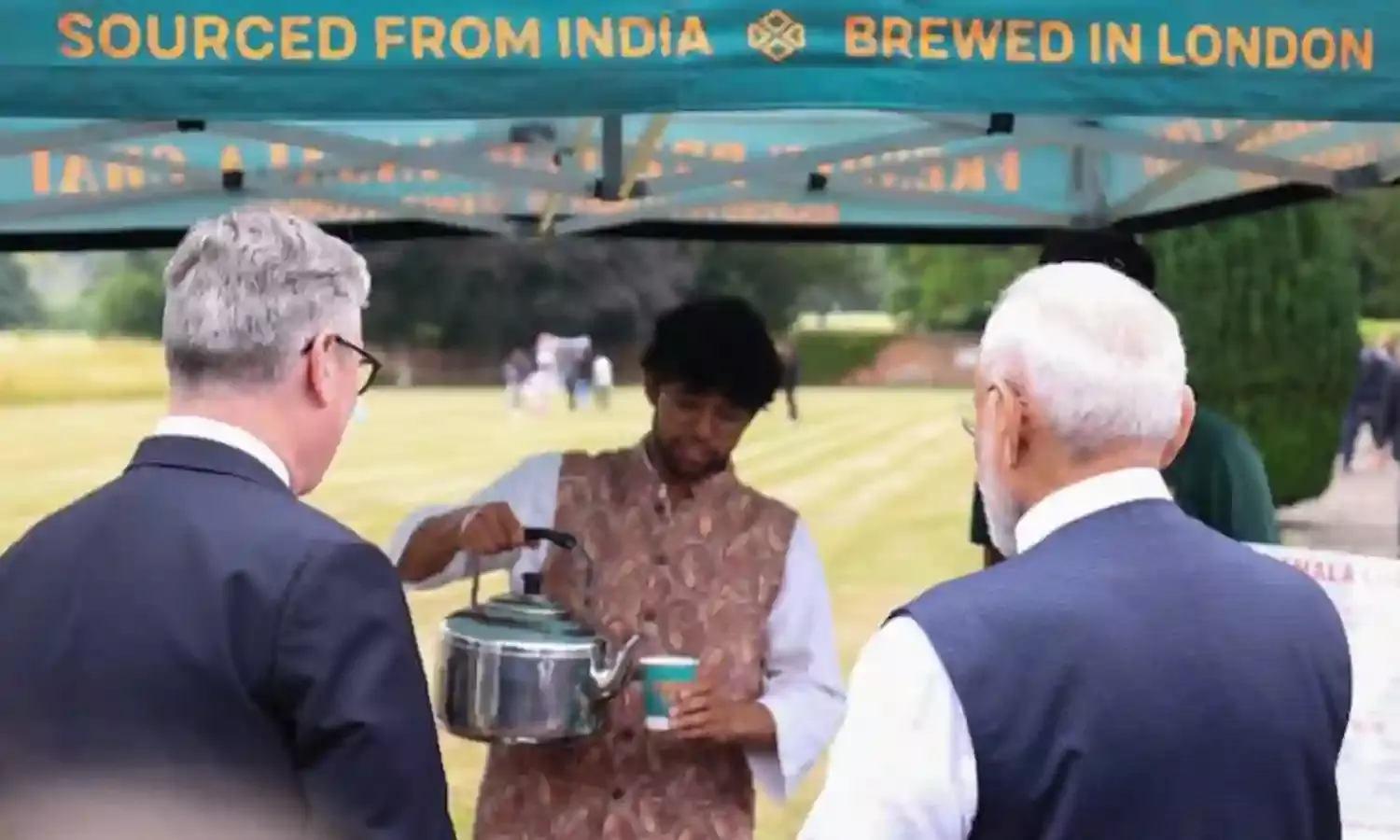
Trump also levied 15% tariffs on the EU despite EU pledging USD 600 billion investment. So, when the doors will open wide for the US, why not for the UK? Another view is Goyal saw this an opportunity for himself; boosting PM Modi’s popularity, and scheduling in Modi’s visit tea with a local tea-seller, tree plantation and meeting with King Charles III, and meeting street-children playing cricket; knowing the Prime Minister’s penchants.
Goyal attributed the India-UK FTA to PM Modi's leadership in a press briefing, and said, "It is a game-changing agreement." It will bring "immense opportunities" to the farmers of India, Indian industry, the MSME sector, the workers, youth and fishermen.
He asserted the agreement was signed with the UK on India's terms while protecting "sensitive items" like agriculture and ethanol. He further said India would be able to ship 99% of its exports to the UK duty-free. However, India does not use all these 99% tariff lines for exports to the UK. Also, there are concerns about hazards to public health over cheaper British junk-food entering India .
Under the FTA, India and the UK have committed to transparent and efficient customs procedures, which includes clearing goods within 48 hours; with provisions against forced source code disclosure and addressing digital spam. At the same time, it does not mandate unrestricted cross-border data flows, and the UK retains the right to negotiate data localization rules if India grants similar terms to other trading partners.
More FTAs are in the offing; India-US Trade Deal, India-Maldives FTA, India-EU FTA, and so on. With minimum or no tariffs, our markets will be flooded with foreign products, including automobiles and EVs, whisky, electrical machinery, cosmetics, soft drinks, medical instruments and more. Foreign whisky/wines is available pan-India, including in BSF/CRPF canteens, but not in military canteens because the first CDS ordered only swadeshi (Indian) to earn brownie points with the political hierarchy.
India has the highest taxation regime globally. Tesla EV will cost over Rs 60 lakhs. The media mentions India’s ‘burgeoning middle-class’ but no mention of skyrocketing costs of daily living. Not many middle-class (called “cattle class” by Shashi Tharoor) can buy a Tesla EV. Now the RBI Governor wants even UPI transactions taxed. But we have ministers, politicians and bureaucrats whose wards study abroad, and many have their ill-gotten wealth stashed abroad in dollars.
Exports will boom under the FTA and the government will tax export earnings. Will the push in exports, coupled with unchecked population growth, cause scarcity and price-rise in India, burdening the common man even more? How will the poor farmer and fisherman export their wares under the FTA? Would they be at the mercy of corporations?
The politico-corporate nexus is well established: corporate tax revenue forgone by the government from FY 2019-20 to FY 2023-24 totalled Rs 3,67,261 crores, according to a post on Meta.
Finally, plenty is said about the “strategic” and “operational” gains under the India-UK FTA. But what about strategic fallout in terms of national security? How come so many economic offenders are sitting pretty in the UK despite a formal India-UK extradition treaty?
Couldn’t we have linked their extradition to signing this FTA? Forget the USD 47 trillion the British looted from India, but have we ever discussed the British support to the Khalistan movement and the MI6-ISI anti-India nexus, other than making random remarks? Are we balancing the economy with security?
Lt General Prakash Katoch is an Indian Army veteran. The views expressed here are the writer's own.