
- >>
- OPINION
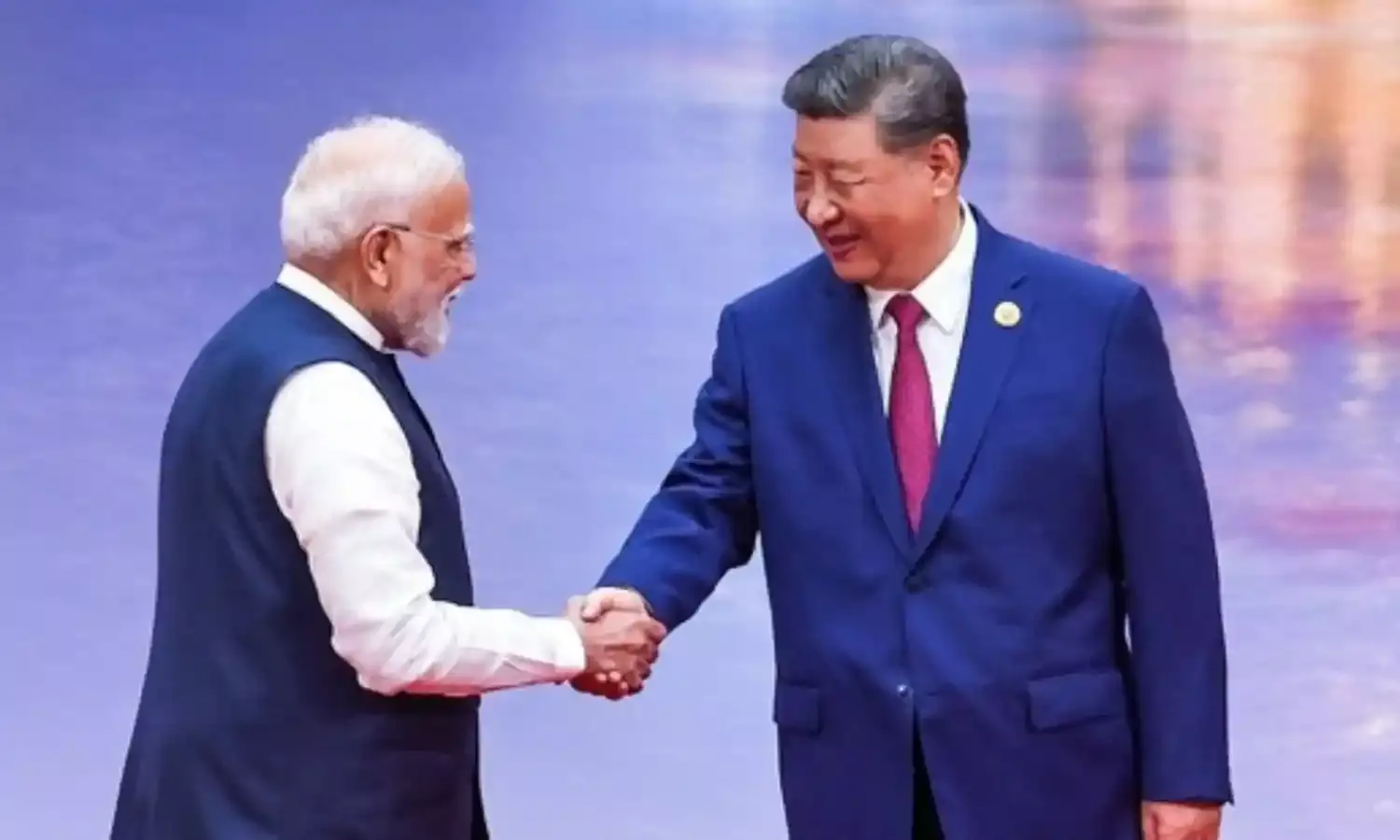
Before attending the Shanghai Cooperation Organisation (SCO) Summit in Tianjin, Prime Minister Narendra Modi held a bilateral meeting with Chinese President Xi Jinping on August 31, 2025. PM Modi did not attend the SCO Summit in Astana, Kazakhstan in 2024 and held the previous one as rotatory Chairman on-line, not in-person.
His decision to attend the SCO Summit in Tianjin was obviously pushed by Donald Trump’s massive tariffs against New Delhi, including the attempt to invade India’s farm sector that constitutes a major vote bank, as agreeing to these tariffs could have cost the Prime Minister his chair.
The Modi-Xi bilateral was held against the following backdrop: -China progressively nibbling at Indian territory over the years;
-India white-washing of Chinese incursions in Eastern Ladakh in 2020;
-India,under Chinese pressure, vacating the Kailash Range in its own territory;
-India no more demanding a return to pre-April 2020 positions along the Line of Actual Control (LAC);
-standoff continuing along the entire LAC with PLA and PLA having consolidated in its new positions in Eastern Ladakh; -Chinese support to Pakistan during Operation ‘Sindoor’;
-India’s inability to stand up to China in general (https://news4masses.com/glitch-sino-indian-tango/?amp=1).
Even during the recent visit of Chinese Foreign Minister Wang Yi to India, where he met PM Modi, External Affairs Minister Jaishankar and National Security Advisor Ajit Doval, Indian TV channels kept showing Chinese communication equipment and weapons being used by terrorists in Jammu and Kashmir, but the issue was not raised with Wang Yi.
Despite tensions between India and China, bilateral trade has continued unabated. India's imports of Chinese goods grew in leaps and bounds, but so did the trade deficit. According to data from the Indian Embassy in Beijing, the trade deficit has also been increasing in China’s favour: USD 73.01 billion in 2021-2022; USD 83.20 in 2022-2023; USD 85.08 in 2023-2024, USD 99.21 in 2024-2025.
The Indian media states that in Tianjin, PM Modi conveyed to Xi three words in Tianjin; mutual trust, respect and sensitivity – a tad different from him saying in the US that AI stands for America and India.
The Prime Minister reportedly highlighted the importance of sensitivity in advancing the relationship - a direct (or rather indirect?) signal to China that it must take India's stance on Pakistan seriously. PM Modi referred to his meeting with Xi in Kazan last year, and talked of border management as agreed to by the Special Representatives (SRs). As well as the resumption of the Kailash-Mansarovar Yatra, direct flights between the two countries and cooperation in the interest of 2.8 billion people of both countries and humanity.
Xi said, "China and India are two ancient civilisations in the East. We are the world's two most populous countries and also important members of the Global South. We both share the historical responsibility of improving the well-being of our two peoples, promoting solidarity and rejuvenation in developing countries, and advancing the progress of human society. It is the right choice for both countries to be friends who have good neighbourly and amicable ties, partners who enable each other's success, and to have the dragon and the elephant come together."
Notwithstanding the smiles, sweet diplomatic language, optics and hype, it was more than evident that the meeting will have little tangible fallout other than increased bilateral trade facilitating Chinese investments in India. Anything beyond will be on Chinese terms. There wasn’t any progress with regard to security, mounting trade deficit in China’s favour and boundary settlement, leave aside the charade of border management despite the 24th round of discussions between the SRs held on August 18, 2025 in New Delhi.
It was amusing to see the MEA focus on PM Modi’s meeting with Cai Qi, a Politburo Standing Committee (PSC) member and the director of the Communist Party of China’s (CPC) General Office. PM Modi shared his vision for the relationship while Cai promised to expand exchanges 'in line with the leader-level consensus reached with Xi’.
Cai Qi is not replacing Xi by any chance and when he promised to expand exchanges in line with the Modi-Xi consensus, the SR’s too have been using the same cliché in their 24 rounds of talks.
But the MEA excels in creating diversions. Before the SCO Summit, MEA proposed inclusion of cross-border terrorism in the SCO statement. SCO’s denouncement of the Pahalgam massacre is being portrayed as a victory, which the whole world already had. But our media hides the fact that the Tianjin Declaration also denounced the Jaffar Express hijack and killings, for which Pakistan blames India.
Finally, China’s foreign ministry has said earlier that it is ready to mediate between India and Pakistan if both sides are willing – not very different from what US President Donald Trump has been indicating. But as mentioned earlier, any progress in India-China relations will only be on Chinese terms. Besides, China (and the US) will continue to support Pakistan as hitherto fore.
Lt General Prakash Katoch is an Indian Army veteran. Views expressed here are the writers own.