

- >>
- OPINION
The Notion of Victory- A Mirage in Modern Conflict
Strategic Ripples Of The Iran-Israel Ceasefire
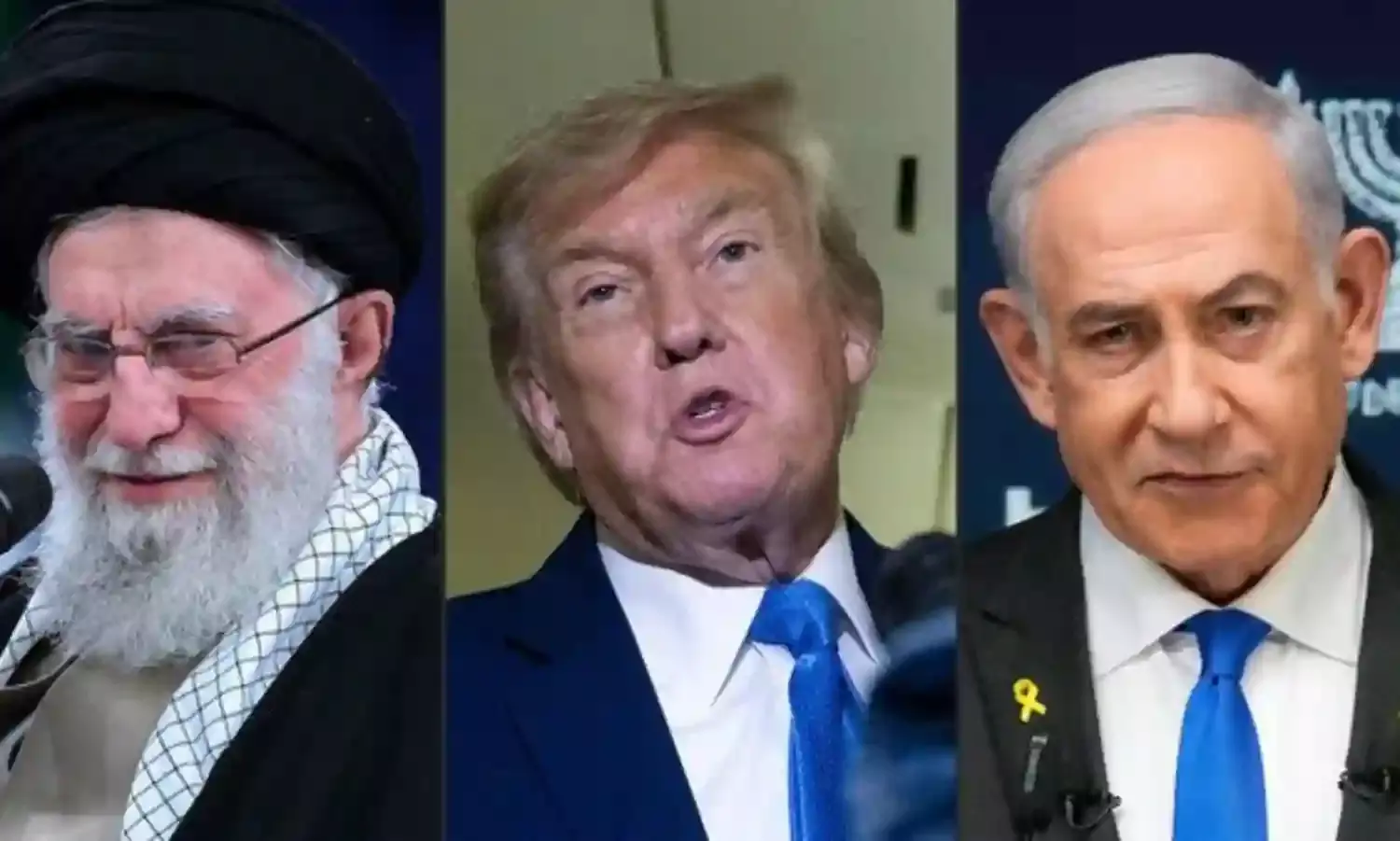
The ceasefire post the 12-day intense conflict between Israel and Iran, brokered by Oman and the US, represents the welcomed calm. The Trump-oincs accompanying added to the media entertainment. But beneath the calm rests an uneasy truth, and the core issues unresolved that shaped a volatile Iran-Israel-US triangle.
Scratch the surface, and little has changed. Iran hasn’t abandoned its nuclear calculus. Israel still sees Iran as an existential threat with the growing influence of its proxies - Hamas, Hezbollah and Houthis. As for the U.S., its unilateralism and exceptionalism continue as a global threat with a volatile concept of ‘Bombing for Peace’. Yet its hurried disengagement aimed at steering clear of another drawn-out conflict, refocusing on its primary sectors and trying to look decisive without deepening its footprint. Iran sits pretty, scarred but sure to survive and roar.
U.S. President Donald Trump has characteristically portrayed the ceasefire as a diplomatic masterstroke. In a primetime address reminiscent of earlier “historic” claims, he announced that peace had been achieved through American strength. According to official statements, Iran’s nuclear program has been “degraded,” key personnel eliminated, and deterrence restored.
But the reality is more complex. The so-called peace was preceded by high-risk airstrikes, the first combat deployment of advanced munitions like the GBU-57 bunker buster, and covert intelligence operations. There are whispers of unspoken ultimatums delivered via intermediaries, and strategic signals sent through targeted assassinations. What appears on the surface as diplomacy may well be coercion in disguise—a truce dictated, not negotiated, and so not long-lasting.
Trump’s primary aim appears to be geopolitical bandwidth. With Ukraine and the Indo-Pacific requiring U.S. attention, a temporary lull in the Middle East serves his agenda. But such quietude is fragile, built on fear and ambiguity rather than trust or agreement.
Iran’s muted response to the US and Israel strike was a playbook understanding, a face saver for the domestic audience, yet non-escalatory to avert an all-out war. It preserved both its regime and nuclear deterrence, without venturing into closing the Strait of Hormuz or withdrawing from the NPT to another escalation level.
Experts believe Iran’s nuclear program, though hit, remains viable. With inspections halted, it may quietly resume enrichment behind closed doors. And with rising global polarisation, Tehran may find sympathetic allies—such as Russia and China—willing to back it diplomatically or technically. Its response may not come quickly, but Iran is unlikely to let recent strikes reshape its destiny and the future strategic path.
Israel did eliminate the top military and scientific community of Iran and also damaged the nuclear facilities, along with the US strikes. Yet the threat remains not subdued but framed in vengeance. Iran is unlikely to retaliate conventionally. Instead, Israel now faces the threat of asymmetric payback—proxy attacks, cyber warfare, or regional escalation through allied groups.
And by damaging Iran’s known nuclear sites, Israel may have pushed the program underground, beyond the reach of IAEA inspectors or future strikes. In trying to contain the threat, Israel may have driven it into the shadows that could cast the storm. The question lingers: has Israel weakened its adversary, or hardened its resolve?
Paradoxically, the campaign may have bolstered Iran’s internal cohesion. Protests have given way to nationalist sentiment. Martyrs have replaced dissenters. The regime, far from crumbling, appears more entrenched.
There is no formal treaty, no verifiable timeline, and no independent verification of terms. This “ceasefire” is largely built on ambiguous statements, backchannel diplomacy, and the temporary exhaustion of all sides.
The fog of war has given way to the fog of ambiguity. Was the truce intended as a diplomatic off-ramp—or is it a smokescreen for future operations? Are we witnessing de-escalation—or merely reloading?
One cannot ignore the geopolitical undercurrents. Reports suggest China may resume purchasing Iranian oil with tacit American approval, a quiet concession to keep energy markets stable. Trump’s message to Beijing—"you can now buy Iranian oil"—is not just economic. It is strategic messaging aimed at preserving a semblance of calm ahead of renewed confrontations elsewhere.
In contemporary warfare, particularly in shadowed operations like Op Midnight Hammer, the traditional boundaries of victory have blurred beyond recognition. The media got their mushroom dust, the Pentagon got its footage, Israel took the credit, and Iran got a live test of its subterranean resilience. But deeper analysis reveals a more sobering truth—the real outcome was stalemate dressed as symbolism.
Scratch beneath the theatrics, though, and it was less a triumph than a televised stalemate—draped in symbolism and spun to fit each player’s narrative. President Trump, always with one eye on a Nobel and the other on Ukraine, declared he’d stopped a nuclear war.
Prime Minister Netanyahu tallied two wins on his scorecard: neutralising a missile threat and dodging a nuclear escalation. But let’s be honest—his real victory was surviving yet another domestic political storm.
Supreme Leader Ali Khomeini had the last laugh, playing to the galleries with his regime remaining intact, the ambitions unshaken. The UN was a cheerleader, Pakistan was confused, and the rest of the world was happy at the ceasefire.
In just 12 days, the Israel–Iran conflict laid bare a brutal economic truth: wars aren't just fought with missiles—they’re paid for with futures. Israel, with its advanced missile defence architecture, burned through $8.7 billion in under two weeks. Despite its strong fiscal base, the war pushed Israel’s military spending to 8% of GDP and widened its budget deficit.
Iran, while spending less directly, was hit far harder structurally: its oil exports collapsed from 2.5 million to just 150,000 barrels a day, inflation soared past 43%, the rial lost over half its value, and key nuclear facilities were wrecked.
But the United States didn’t walk away unscathed. Beyond the cost of precision-guided munitions and airpower projection, the U.S. has faced rapid depletion of its high-end war inventory. Critical assets like THAAD interceptors, already in limited supply, were used extensively to shield regional bases and Israeli cities. For Washington, the price of siding firmly with Israel isn’t just diplomatic—it’s logistical, with ripple effects on readiness in other theatres. The message is clear: in today’s high-tech battlespace, the economics of war isn’t just about who spends more, but who can afford to spend again.
Global and regional implications are as follows:
Unilateralism Defining International Norms: The unilateral exceptionalism by bombing for so-called peace, though a legacy of WW2, and targeted assassinations, is redefining disregard for international norms. Diplomacy appears increasingly as a tool of delay, not resolution. The United Nations stands more as a cheerleader or a self-appointed saint than an empowered institution.
Strategic Signal to Other States: States observing from the sidelines, especially those with nuclear ambitions, are drawing lessons. Transparency and cooperation with Western institutions, as Iran had previously pursued, are now viewed as liabilities. The North Korean model—opacity, deterrence, and isolation- is gaining quiet approval.
Proliferation Risks: With the IAEA sidelined and Iran’s higher resolve, the risk of regional proliferation rises. Saudi Arabia and other rivals may accelerate their own deterrence programs. The Middle East could become the next flashpoint for a multi-state nuclear standoff. Nuclear weapons veil power and enforce escalatory deterrence. Ukraine, being stripped of its assets, faces the brunt today.
Great Power Calculations: Russia and China, both invested in counterbalancing U.S. influence, see a strategic opportunity. Russia, in particular, may consider providing covert assistance to Iran as a form of payback for Western involvement in Ukraine. China, focused on energy stability, may deepen trade ties with Tehran under the radar. The RIC (Russia-Iran-China) triangle is real and growing with a common anti-US agenda.
For India, this evolving dynamic carries significant weight. The region remains vital for the country’s energy security, hosts a large Indian workforce, and accounts for significant trade. A fresh spiral of conflict, therefore, is not a distant crisis—it has direct implications for Indian interests. Energy security remains primary and unstable. India’s strategic reserves need to be expanded and dependencies reduced.
India will have to balance the contradictions in its relationship with the US, Israel and Iran and manage the RIC emergence. The Iran nuclear question, now edging closer to breakout potential, and the growing risk of a regional arms race carry the danger of wider Gulf instability, something that would affect both economic ties and the safety of over eight million Indian nationals in the area.
The conflict is no longer confined to traditional battlefields. Cyber operations and proxy warfare have already shaped the space, demanding greater coordination between India’s intelligence, cyber defence, and policy apparatus.
Lessons from Operation Sindoor and the Middle East’s recent 12-day conflict also reinforce a hard truth: future warfare will not wait for India to catch up. Precision capability, indigenous systems, and multi-domain readiness, including information and cognitive warfare, must now move from theory to preparation. The window for strategic hesitation is closing, and capabilities have to be built as per day before yesterday.
What has unfolded between Iran and Israel is not a resolution—it is a pause.
Those engaged in shaping national security and foreign policy must treat this period as a brief opening, not an endpoint. It is a chance to reset approaches before the next escalation inevitably arrives. Formal diplomacy, sidelined in recent years, must return to the table with purpose. Structured dialogue—not just ceasefires or reactive statements—must be pushed by countries that still carry credibility across divides. India must take the lead, along with European nations and multilateral platforms, to facilitate long-lasting peace.
The geopolitical landscape is also being redefined. With Russia and China's involvement in West Asia calculus, India must rebalance its foreign policy where old alignments no longer exist. Clarity, not sentiment, should drive its choices. Above all, power—hard power—matters. Military strength remains the only assurance behind diplomatic voice and national interest. This is not about escalation, but readiness. Defence planning in India needs a fundamental relook: sharper budgeting, coherent doctrines, modern structures, and deeper endurance. It is not a matter of urgency anymore—it is a matter of responsibility.
The question is not whether conflict will return—it is when, where, and how. For now, we must make the most of the breather. Reinforce institutions. Support diplomatic channels. Rebuild trust. Because in this theatre, peace if not pursued diligently will remain nothing more than a brief intermission in a long and dangerous play.
Lieutenant General A B Shivane, is an NDA alumnus and a decorated Armoured Corps officer with over 39 years of distinguished military service. He is the former Strike Corps Commander and Director General of Mechanised Forces. The views expressed here are the writer’s own.