

- >>
- OPINION
When an eminent historian-human rights defender, whose credibility in academic spheres, and the human rights community speaks, the world sits up to listen. To disagree or ignore what Ilan Pappe has to say, is to be the ostrich who buries its head in the sand to avoid confronting reality.
Pappe vigorously posits that Israel's policies and actions, particularly its massacre of Palestinians, in general, and Gazans, in particular since October 8th 2023 are leading to its downfall. The unending occupation characterised, as they are, by colonial, racist, and apartheid practices are untenable. Israel's actions are rapidly isolating it internationally and corroding its moral standing.
Pappé's views stem from his analysis of the history of the Israeli-Palestinian conflict, particularly the events of 1948, which he defines as a pogrom of ethnic cleansing. Israel's policies towards Palestinians, including land confiscation, settlement construction, and restrictions on movement, are not only unjust but also unjustifiable in the long term.
Pappé deems Israel's actions as dangerously inclined towards its seclusion because international censure is swiftly mounting. Pappe argues that the only way for Israel to evade a self-inflicted calamity is to recognize its evil ways, and conform within the scope of international law and UN resolutions. Clearly, Israel is imprudent to assume that its impunity is forever. In its inebriated stupor, it irrationally persists with irrational military transgressions.
Pappé's voice is among the most influential voices aggressively advocating with the international community to drive political and public opinion to get Israel to alter its dogged stubbornness. He is among a section of radical analysts in Israel, Europe and the USA, all of whom are engaged in persuading Israeli politicians to reverse their ways and abandon colonial and racist paradigms.
Pappe’s influence has reached multitudes of intellectuals, artists, writers, musicians, economists, comedians, sportspersons and entire teams of sports fans who oppose Israel’s violent punitive actions against the Palestinians, are rising swiftly and merging into a rallying point, or in their own stations, to make known Israel’s atrocities against the Palestinians.
Pappe advocates for boycotts and other forms of pressure to aggressively advocate political change in Israel by having the regime isolated and stripped of political, economic privileges. It is the complicity of western governments that sustains Israel with hefty financial and military support.
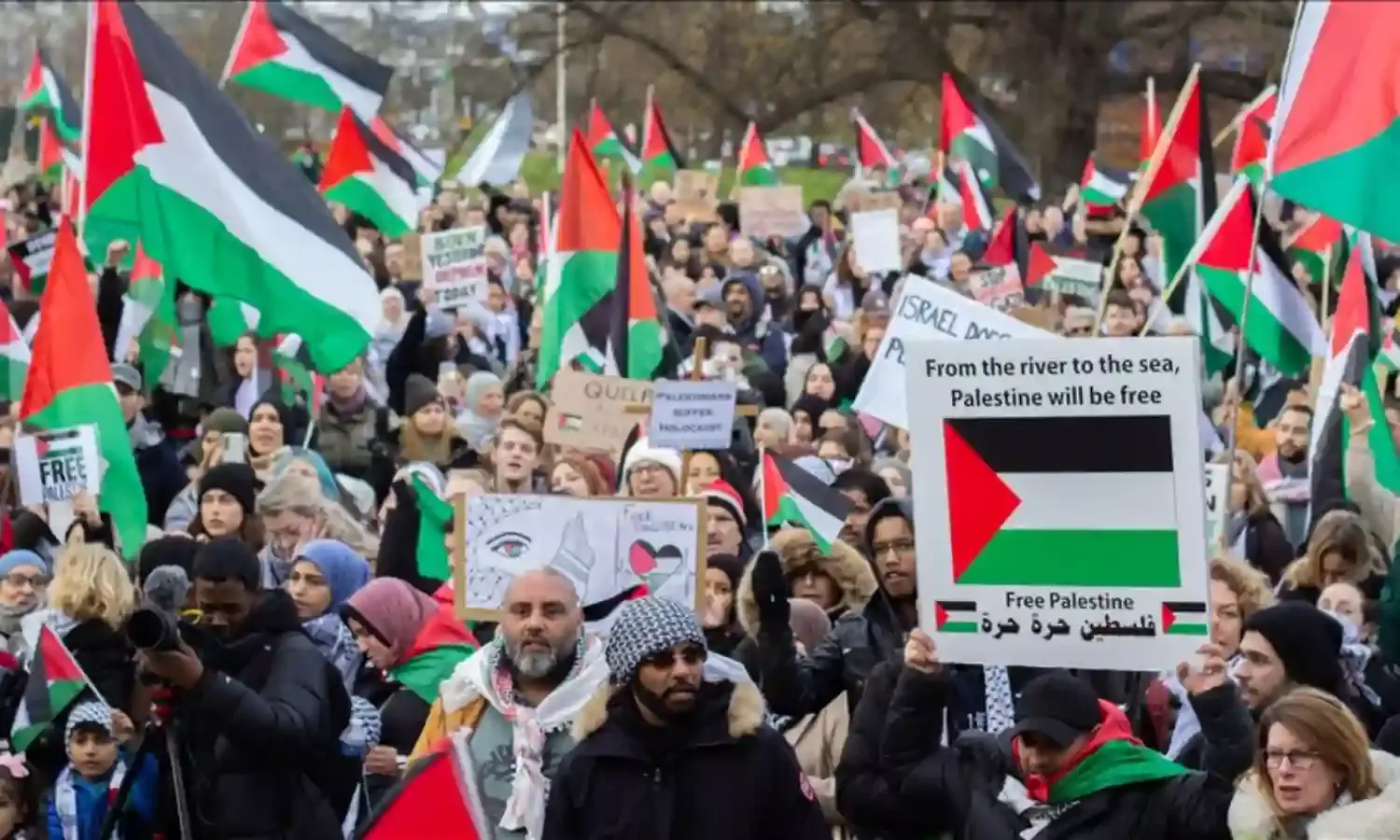
Yet, the streets of Europe and USA, campuses, workers, pension funds beg to disagree. They are swiftly joining the campaign to isolate Israel by divesting their funds from banks and other financial institutions that hitherto supported Israel. It is turning out to be a seismic shift.
The ruthlessness of Israeli military oppression is generating anger and resentment on the Arab streets and other Muslim countries. This alone has served as a deterrent for regimes to go overboard with political steps such as ‘normalization of relations’ and any form of recognition to Israel. It is these checks and balances that have slowed, even suspended outright support for Israel.
The US, individual European countries, and the EU who are dragging their feet. Spain, Ireland are rare exemptions that have displayed gumption in their political positioning. France, UK, and Germany have wobbled between outright calls for an end to the genocide while surreptitiously reneging on their hypocritical threats. Europe must rid itself of this bizarre colonial mentality of permitting European domination in a region that is not theirs. Proxy control of oil is not a moral political project.
Samer Jaber, a political activist and researcher on political economy writing in Al Jazeera upholds the view that “Israeli aggression and expansionism are not signs of ascendance; rather they point to inevitable failure... Israel has started openly pursuing its greatest Zionist dream: expanding state borders to achieve Greater Israel and accelerating the ethnic cleansing of the Palestinian people from their homeland”.
The reality is that after nearly eight decades of existence, Israel has failed to achieve legitimacy in the eyes of the region’s peoples and lasting security for itself. Its present resurgence based on its foreign, domestic and military policies are based on a settler-colonial logic which makes them untenable. Israel puts up a façade of power and overt confidence in attaining regional dominance, this understanding paradoxically reflects a strategic failure.
The hard truth is that almost the entirety of Israel’s political forces concurs that the direct application of stripped military power is the sole strategy to advance colonisation. An estimated 82 percent of Jewish Israelis support the ethnic cleansing of Palestinians in Gaza.
In the 1990s, Israel could have well created a platform for peace by complying with the agreements of what could have been a two-state solution. An independent Palestinian state was clearly the only moral political option. Israel resorted to political deception, throttling negotiations to disguise their settler-colonial policies.
It prompted a Second Intifada that was far more deadly than the First. With a combined casualty figure for combatants and civilians, the violence during this phase is estimated to have resulted in the deaths of approximately 3,000 Palestinians and 1,000 Israelis, as well as 64 foreign nationals.
Boundless and excessive support for Israel, aimed at maintaining its dominance as the primary regional power, with unapologetic western support, will blowback. However, a counter political alliance of sorts is now emerging with influential regional players such as Turkiye, Saudi Arabia and Egypt to counter-balance Israel’s artificial power base. Clearly Western agendas are inadvertently infringing on Israel’s own intents and purposes.
China is going to be a thorn in Israel’s political flesh. They possess the economic and political clout to counter balance the influence of the West. China’s strict loyalties to its global political vision are a viable alternative. Israeli egregious plans for regional hegemony will be aggressively curbed by China’s political stature and strength. The West is too frail to acquiescently dictate to China.
Israel is on a slippery slope today. Families of hostages are on the streets demanding an all-inclusive deal to return all captives - living and deceased—in a single phase. They know that Israeli hostages who have been since October 2023 could have been released had Netanyahu prioritized that in lieu of his own political survival instead.
Meanwhile Israel deteriorates. More Israelis were already moving abroad after the Hamas-led attack. About 12,300 Israelis left the country that month and had not returned as of June 2024. This compared to only 3,200 who left permanently the year before - a 285 percent increase. Almost twice as many Israelis (about 34,500) permanently left the country between July and October 2023 than had done so in the same period in 2022 (about 17,800).
It was because of the huge surprise attack by Hamas, on October 7, 2023. (Gil Cohen-Magen/AFP). The Times of Israel reports that nearly a million Israelis live abroad. While most live in the US, Europe is now home to some 30% of Israelis abroad, bringing ‘significant transformation’ to local communities.
War costs have dimmed Israel’s public services. Israel’s already strained public services are at risk of collapse, claims Prof. Karnit Flug, a former governor of the Bank of Israel and current senior fellow at the Israel Democracy Institute (IDI). These services include hospitals, schools, and public transportation. The looming menace of economic sanctions and international isolation by Israel’s Western allies over the battering of Gaza is feared to further impinge on the quality of life of Israelis. Israel is already paying high interests owing to enlarged debt levels to finance the significant defense burden.
Ilan Pappe sums up the impasse best: “The political class does not seem to have any plan for balancing the public finances amid perpetual armed conflicts, beyond becoming increasingly reliant on American financial aid. In the final quarter of last year, the economy slumped by nearly 20%; since then, the recovery has been fragile. Washington’s pledge of $14 billion is unlikely to reverse this”.
Israel used to be at the cutting edge of warfare narratives. That is lost with the arrival of smartphones, social media, and the digital archive. Israelis once own global narratives of trauma, and are now subjects of universal enquiry. Jasim Al-Azzawi, analyst and journalist writing in Al Jazeera asserts: “Since October 7, 2023, the war of images has eclipsed the war of weapons.
From Gaza’s pulverised hospitals and starving infants to mass graves and desperate fathers digging through rubble, every pixel captured on a smartphone strikes deeper than a missile. These raw, unfiltered, and undeniable images have a far greater impact than any press conference or official speech. Israel cannot delete them or drown them in propaganda. The psychological toll of this visual war is reverberating deep inside Israeli society”
Social media traces every Israeli bombardment and war crime to a point where even Israelis are wrestling with the moral dilemma of its political leaders and its cynical military plotters. These primeval images are eroding Israel’s moral high ground. Al-Azzawi avers: “For the first time, public discourse in Israeli society includes fear of the mirror: what the world now sees and what Israelis are forced to confront”.
Israel’s diplomatic standing has suffered a crushing blow. Europe and North America are challenging arms shipments, trade deals, and diplomatic cover. Television and social media do not help Israel and its supporters to escape the screenshots of dispersed bodies and famished children. There is now a widespread perception of Israel’s unpreparedness and inability to defend itself among the country’s Jewish population.
There is mounting pressure to exempt military exemption for ultra-Orthodox Jews. There is only a slim chance this will impact results on the battlefield. It reflects utter desperation and has widened political divisions within Israel.
Almost everywhere - parliaments, campuses, city councils, and editorial rooms the common sense that emerges is that Israel cannot win on sheer military force. With the ICC and ICJ scrutinising each complaint, the Israeli military is worried about the worst. Soldiers have been admonished for gleefully taking selfies and filming themselves demolishing Palestinian homes. This is now being harvested as evidence by international human rights organisations.
Elsewhere Israelis have fled countries they travelled to due to war crimes complaints filed against them – the consequence of resentment against Israel’s of apartheid-based discrimination.
Zionism is waning, particularly among younger generations and within some Jewish communities whose divisions have weakened their cohesion. The rise of anti-Zionism and the challenges posed by the Israeli-Palestinian conflict have contributed to this trend.
Pushed to the corner, they must adopt an attitude towards peaceful co-existence. The one-state solution/bi-national state, is ideally meant to successfully deliver self-determination to Israelis and Palestinians in one country, thus granting both peoples independence as well as absolute access to all of the land.
Yet, for all the revulsions that Israel has inflicted on Palestinians, this may never come to fruition. Will Israel actually gulp the notion of a bi-national state where both peoples share a common pluralistic secular political culture? Would Palestinians concur co-existing with its killers on shared soil?
A two-state solution will require enormous alterations in the geography of the land. A two-state solution implicitly obliges Israel to return to the pre-1967 borders. Israel’s land-grab policies have left the Palestinians with a mere 22 percent of the land. Even this is not contiguous by any stretch of imagination.
Palestinians will rest when final status solutions are resolved. The Committee on the Exercise of the Inalienable Rights of the Palestinian insist that Final status solutions must be foreclosed including clearly defined borders, uprooting the Separation Wall, resolving the Status of Jerusalem, Right to return for Palestine Refugees, Security, water resources, and reversing the status of heritage sites.
"I will go to Israel when the walls come down. I will go to Israel when occupation is gone…. I will go to Israel when Apartheid is over."
-BDS Movement-
Ranjan Solomon has been deeply engaged in the Palestinian liberation struggle beginning with the First Intifada in 1987 through global solidarity justice networks. The views expressed here are the writer’s own.