

- >>
- OPINION
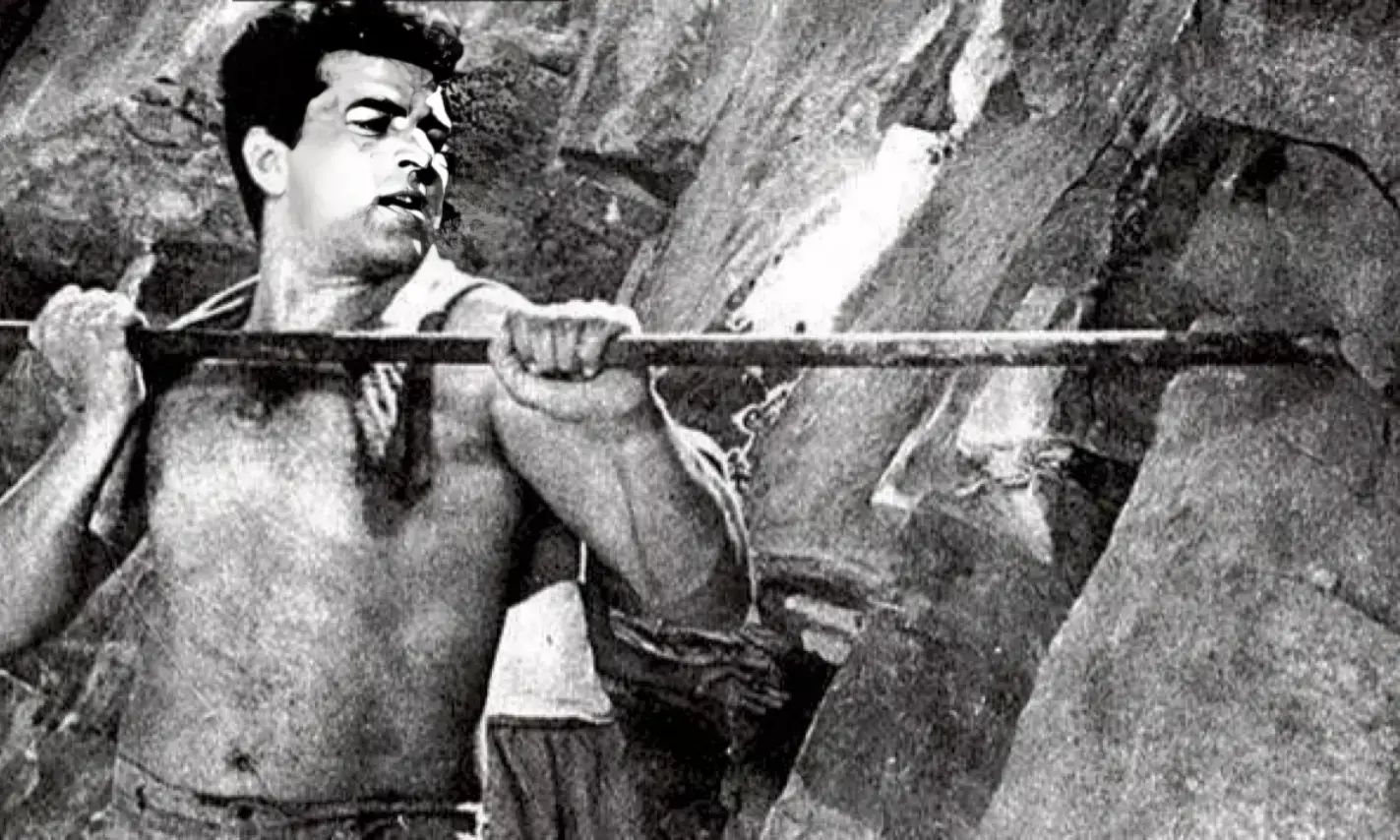
When some famous celebrity passes away, all tributes in the media, be it print or digital or electronic, are focused on the late celebrities’ great qualities of character and on the work he/she has left behind. No one likes to mention his/her negative traits as if they did not exist. But being normal human beings inside, they must have harboured certain faults like any human being.
Either we are not aware of them or do not wish to hurt the fine sensibilities of his close friends and family already wallowing in grief and trying to cope best with their loss. Sometimes, the negative traits are presented as qualities of character.
Dharmendra, who passed away in his residence on November 25, a week or two before his family was planning his grand 90th birthday, proved his steady durability as an actor for sixty long years in the fickle Bollywood industry which hardly gives an actor the opportunity to prove his/her worth for more than a decade or so.
In this ambience, six decades is unthinkable. He had acquired an enviable portfolio of around 300 films most of which hit the box office jackpot solely because he was the hero. Examples are aplenty.
The problem is that the crowds jostled in front of the theatres not because they considered him to be a great actor but because he was the handsomest actor who graced the silver screen. Even the film industry, barring very few exceptions, considered him a great actor.
But can an actor survive successfully for sixty years in a cut-throat industry solely by the power of his looks? He can and Dharmendra is perhaps the unique example of this rare quality.
Looking back on his long repertoire however, one must concede that he was a director’s actor. But here too, few directors explored his potential as a good actor over and above his strikingly good looks, and one can count even them on the fingers of a single hand.
Sparks of his potential can still be seen in Bimal Roy’s Bandini, Hrishikesh Mukherjee’s Anupama, Satyavan and Chupke Chupke and Jahnu Barua’s film Har Pal which, sadly, was never released. Dharmendra made his debut in films with Dil Bhi Tera Hum Bhi Tere in 1960, having been discovered in a talent hunt organised by Filmfare. He went on to have a successful career in Hindi films, working in blockbusters like Bandini, Phool Aur Patthar, Seeta Aur Geeta, Sholay, and Dharam Veer.
His robust and macho body plus his mesmerizing looks were brought forth in the box office hit Phool Aur Pathhar (1966) directed by O.P. Ralhan in which his masculinity charmed everyone. He plays a rugged and rough thief who falls in love with a tortured widow played by Meena Kumari. In one scene, we see him taking his shirt off to cover a shivering Meena Kumari and the first macho, sexy, angry handsome hero of Hindi cinema was born.
Author and film aficionado Pratik Majumdar writes: “It was a defining moment in Hindi cinema. Countless films over past decades have gone on to reinforce and firmly establish Dharmendra as the quintessential mard. The ultimate he-man, the evergreen action star.”
After Raj Kapoor, Dharamendra became the second Indian actor to become hugely popular in the Soviet Union and Warsaw Countries after the film's success. He was often compared with the great Hollywood actors James Dean and Paul Newman in terms of his macho looks but he did not know who they were! He did not watch Hollywood films!
When asked, his response was, “Some people compared me to a Hollywood star but maine uski picture hi nahin dekhi thi (I had never seen his films). I went and watched his film then and then I thought maybe from the side, I do look like him a little. Mujhe khud bhi lagne laga (I myself started feeling like that)."
But the success of Phool Aur Pathhar had a thorn hidden in the flower. It was Meena Kumari, the great legend of Bombay cinema for decades together. Meena Kumari, who lived a single life after her divorce from her much aged husband Kamal Amrohi who was already a married man with grown sons, fell madly in love with the young, dashing and super handsome Dharmendra.
They acted in many films as a romantic pair such as Main Bhi Ladki Hoon, Kajal, Majhli Didi, Chandan Ka Palna, Purnima, and Baharon Ki Manzil. When they first worked together, Dharmendra was a newcomer—handsome, sincere, and still trying to make his mark—while Meena was already a celebrated star, known for her grace and emotional depth.
Despite being at very different stages in their careers, their chemistry was natural, and came across on screen quite clearly. Meena Kumari is said to have supported and encouraged Dharmendra during his early days in the industry, and their bond reflected in the warmth they brought to their scenes together.
Phool Aur Patthar played a key role in launching Dharmendra to stardom, and Meena’s presence in that film gave it both strength and soul. Their pairing remains special, a blend of vulnerability, charm, and quiet intensity that left a lasting mark on Hindi cinema.
However, the story goes that when Dharmendra became a very big, sought-after star in Hindi cinema, he shifted his attention away from Meena Kumari, left to drink herself to a tragic death. Dharmenda was already a married man and had four children from his marriage to Prakash before he came to Bombay to try his luck in films.
He was only 19 years old when they got married and went on to have a fairly large family. So, perhaps he did not even realise that his relationship with Meena Kumari had to end some day as though she was divorced, he had a family to pay attention to.
But all that ‘family’ closeness almost disappeared from the horizon of his life when he married Hema Malini 45 years ago without divorcing his first wife Prakash Deol. He was completely diplomatic in keeping his two families separate from one another and this practice continued till he passed away.
Hema Malini never met Prakash Deol and never stepped in the Deol home even once in all these 45 years. The children from the two marriages also remained separate till very recently when Sunny and Bobby Deol accepted Esha and Ahana as their step sisters.
Though Dharmendra was once an elected Member of Parliament of the Bharatiya Janata Party, a post he did not quite care for, his diplomacy surfaced brilliantly the way he kept his two families completely separate from one another. Both wives appeared quite content with this arrangement as Prakash never asked to be divorced and Hema Malini publicly at least never expressed a desire to live with him. She lived with her two daughters in a separate house where Dharmendra was just a regular visitor and they sometimes went on vacations with the two girls.
Dharmendra’s other big drawback was his over-fondness for the bottle. He was almost always drunk and one wonders how directors and his co-actors coped with his passion for alcohol. At a prize distribution ceremony in Kolkata where he was bestowed the Lifetime Achievement Award he was tottering on the stage as he gave his acceptance speech with a blur of words strung together haphazardly.
Some films Dharmendra had signed never saw the light of day. Among these is a remake of Sarat Chandra Chattopadhyay’s Devdas which Gulzar had decided to make featuring Dharmendra in the title role, Hema Malini as Chandramukhi and Sharmila Tagore as Paro. The film never went on the floors because it was stonewalled by funding issues. Gulzar also directed him in Kinara in a character role in which he played a lovelorn poet and Dharmendra gave a surprising performance though he was not the hero.
Dharmendra was so handsome that Dilip Kumar was once reported to have said that when he went to the other world, he would ask God just one question – Why did God not make him as handsome as Dharmendra?