

- >>
- OPINION
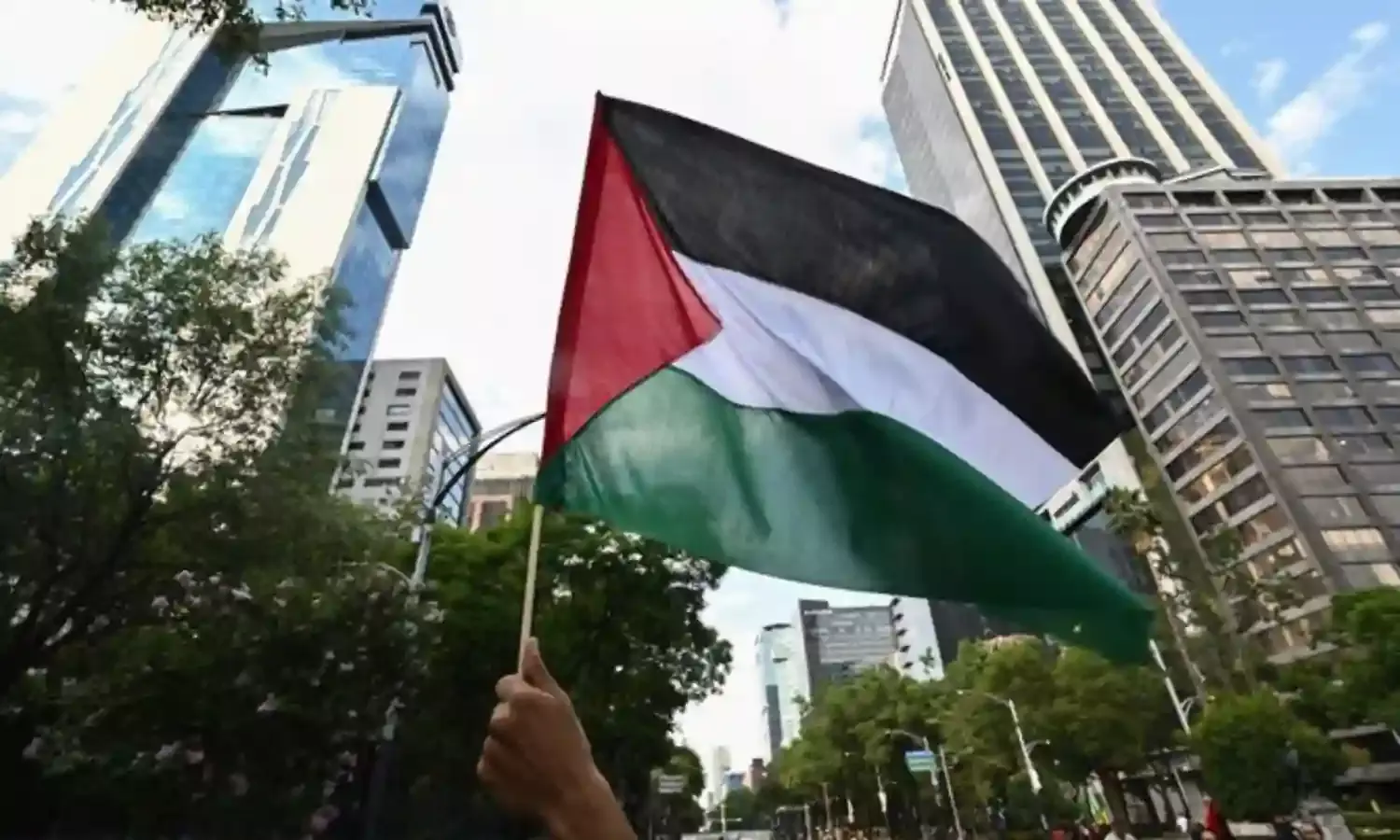
Netanyahu and his cabinet recently approved a plan that involves displacing tens of thousands of Palestinian civilians, including many who had already been forced to flee northern Gaza, to camps in central Gaza.
Netanyahu had earlier declared his ambition to take over all of the Gaza Strip. Israel has now settled for a take-over of Gaza City alone. Israel’s military command has stated: “The IDF will prepare to take control of Gaza City while providing humanitarian aid to the civilian population outside the combat zones.”
The threatened take-over demonstrates just how muddled Israeli political planning is. There is the ground reality as part of which key political leaders, army Generals, and influential civil society groups, and growing sections of the Israeli people challenge Netanyahu’s war plans.
Immediately after Netanyahu’s announcement, it became apparent that the Israeli cabinet decision would witness a perilous escalation in the war. It would escalate catastrophic consequences for millions of Palestinians and take them to the brink.
Palestinians in Gaza already endure a humanitarian catastrophe of horrific proportions. UN chief António Guterres warned that this further escalation will result in additional forced displacement, killings and massive destruction, compounding the unimaginable suffering of the population. He reiterated his oft-repeated appeal for a permanent ceasefire, unimpeded humanitarian access across Gaza, and the immediate and unconditional release of all prisoners.
For Israel which is living through its own internal crises, there will be massive economic impairment. In 2025, Israel's economy is undergoing challenges owing to due to ongoing conflicts, leading to revised growth forecasts and potential long-term economic impacts. While the direct impact of the recent conflict with Iran was limited, there are concerns about potential long-term effects on investment, exports, and overall growth. The Bank of Israel has lowered its GDP growth forecast for 2025, and other factors like political instability and global economic uncertainty are also contributing to the economic headwinds.
Ex-Prime Minister Ehud Olmert was unequivocal about the consequences that Netanyahu’s recklessness could bring. Israel’s plan to take control of Gaza City won’t save the remaining hostages, but will rather endanger lives and “increase the number of crimes” in the territory. The take-over “is not going to save the hostages, (but) is going to cost the lives of many soldiers, and is going to cost the lives of many non-involved Palestinians”.
Chancellor Friedrich Merz, of Germany, hitherto the second-largest arms supplier to Israel, has categorically decided his government will not approve any exports of military equipment that could be used in the Gaza Strip until further notice. That was a blunted rebuff to Israel’s plan to expand its military operations there. Netanyahu retorted with alacrity accusing the German government of “rewarding Hamas terrorism”.
France joined the chorus of countries who censure Israel’s plan. The list is growing: UK, China, Turkey, Egypt, Jordan and Saudi Arabia, are convinced that an Israeli takeover of Gaza City would “worsen an already catastrophic situation without enabling the release of Hamas hostages, its disarmament, or its surrender”.
France’s scathing assault on Israel asserts that the take-over “would constitute further serious violations of international law and lead to an absolute stalemate…undermine the legitimate aspirations of the Palestinians… obstruct a contiguous state, and pose a threat to regional stability.”
There is a consensus in the international community of what the future of Gaza should resemble and the way it must be grasped, namely through a framework of a future Palestinian state led by the Palestinian Authority.
EU Council president Antonio Costa has awakened to the hard fact that Israel’s decision to take over Gaza City “must have consequences for EU-Israel relations” and urged Israel to reconsider.
In the just concluded Emergency UN Security Council Session (UNSC), Israel has been warned that the Gaza City Takeover Could Trigger ‘Another Horrific Chapter’ in the conflict. Israel’s delegate offered a lame ruse: “This Is Liberation” from a Terror Regime. It begs the question: What does the Gaza genocide resemble?
The UNSC underlined that the one and only one way to end the human suffering in Gaza is through a full, immediate and permanent ceasefire. The other two immediate steps required the immediate and unconditional release of all hostages, as well as rapid, safe, unimpeded and large-scale delivery of humanitarian aid to the enclave. Israel’s unlawful occupation had to end and the achievement of a viable two-State solution, he stressed, stating: “Gaza is, and must remain, an integral part of a Palestinian State.”
The Office for the Coordination of Humanitarian Affairs in Geneva asserted: “The suffering endured by Palestinians and Israelis over the past 22 months has been nothing short of soul-searing.” More than 61,000 people have been killed, including over 18,000 children, and 151,000 have been injured, while 50 hostages are believed to remain in Gaza. Under the rubble are probably many thousands whose bodies have yet to be recovered. Meanwhile, humanitarian conditions are beyond horrific.
“Gaza is facing hell,” said Algeria’s delegate at the UNSC and added Israel’s objective is clear: “To push an entire people outside their homeland.” The UK concurred, declaring that the expansion of Israel’s military operation is “not a path to resolution but a path to more bloodshed.”
The Russian Federation’s delegate condemned Israel’s intentions to seize Gaza as “dangerous steps which undermine the already fragile prospects for the peaceful settlement of the Middle East conflict”.
The Republic of Korea said that its primary target, Gaza City, is one of the few remaining areas where a large civilian population has sought tenuous refuge, and a renewed full-scale operation against it will inevitably cause another round of forced displacement and killings.
Denmark’s was sharp: “Simply unacceptable- what is needed are transparent investigations.” France’s delegate demanded that Israel allow the UN and all humanitarian actors to operate freely and safely. Greece’s delegate reiterated that any potential annexation of Gaza or any other part of the Occupied Palestinian Territory would contravene international law.
Slovenia’s delegate stated that the 1 million people living in Gaza City will be displaced once more, chased from corner to corner, to tiny camps, or even beyond. The responsibility to protect them against the upcoming military onslaught “weighs heavy on our shoulders”. Pakistan’s delegate was unambiguous: Israel’s plan aims to erase Palestinian presence and extinguish prospects for peace.
It is clear that Israel seeks the culmination of a campaign of ethnic cleansing. To shield Israel from accountability is to be complicit in Israel’s crimes. Kuwait’s delegate, on behalf of the Gulf Cooperation Council, called for urgent and binding measures “to stop this brutal aggression”.
Panama, calling for a break with “warlike logic”, affirmed that the Gazans “do not need more fire”, they need water, medicines, food and protection. An immediate ceasefire and the return of hostages are also “the very wishes of the Israeli people and the families of the hostages”, said China’s representative. Senegal’s delegate added: “Humanity is watching us, and history will judge us.” Sierra Leone underscored that genuine normalization, endorsed in the Arab Peace Initiative, offers Israel the prospect of lasting peace, security and regional acceptance - but only with an end to occupation and the realization of Palestinian statehood.
In the same vein, Iraq’s delegate, speaking for the Arab Group, called for the rights of the Palestinian people to be restored - including the right to self-determination, the right to return and reparations for Palestinian refugees. Somalia affirmed that Israel’s announcement of its intention to impose military control over the entire Gaza Strip “is not an abstraction [but] a chilling blueprint for the next chapter of devastation.
The Permanent Observer for the State of Palestine described the plan as “the destruction of the Palestinian people through forced transfer and massacres to facilitate its annexation of their land. “Your actions today will determine the fate […] of our region for generations to come.”
On the Arab Street there is anger and resentment every time a child is killed, a building bombed, a house demolished, and Settlers rob resistance.
If global democracy were to function in its truest sense, the US clearly does not belong in the global community. The same applies to Israel. Violent action is not new to the US. The United States has taken part in 119 armed conflicts. And they have been at war 222 out of the 239 years they have been a nation.
Israel dismissed the very intent of the UNSC complaining that the Council had convened only to “chastise the one democracy in the Middle East”. Many Israelis, disillusioned after more than a year and a half of fighting, want an end to the war largely out of concern for the 54 Israeli hostages who are believed to remain in Hamas captivity of whom 31 are believed to be dead. At the end of December 2024, the Israel Prison Service (IPS) was holding 9,619 Palestinians in detention or in prison on what it defined “security” grounds, including 2,216 from the Gaza Strip. At that time, the IPS was also holding 1,705 Palestinians, 3 of them from the Gaza Strip, for being in Israel illegally.
Support for the military campaign has given way to exhaustion as the conflict grinds on. It was already waning a year ago. Less than a third of Israelis supported fresh military action in Rafah, according to the IDI, while almost two-thirds supported a deal with Hamas. More recently, several polls carried out this year by well-respected organisations have found a majority in favour of a ceasefire deal – with the primary aim of releasing the hostages.
This religious justification for seizing Palestinian land has been a regular theme of hard-right nationalist parties in Netanyahu's coalition since well before the war. Cabinet members like finance minister, Bezalel Smotrich, have long pushed for Israel to annex the occupied West Bank – or assert "sovereignty" but the war in Gaza, and the stance taken by US President Donald Trump, have opened up dreams of annexing that territory too. It will forever be a horrible stain, with Israel losing its vantage space in the international arena.
Israel just killed five Al Jazeera journalists and two others in a bizarre attack. It provoked the well-known Marwan Bishara of Al Jazeera to describe Netanyahu as irreversibly pathological. Not only must countries show outrage and condemnation, tough sanctions and isolation coupled with Boycott and divestment must couple Israel’s isolations in trade, politics, sport, culture, and education.
Ranjan Solomon has been involved in the Question ofT Palestine since the First Intifada and through many crises’ moments in Palestine. He is a human rights defender and political commentator.