

- >>
- OPINION
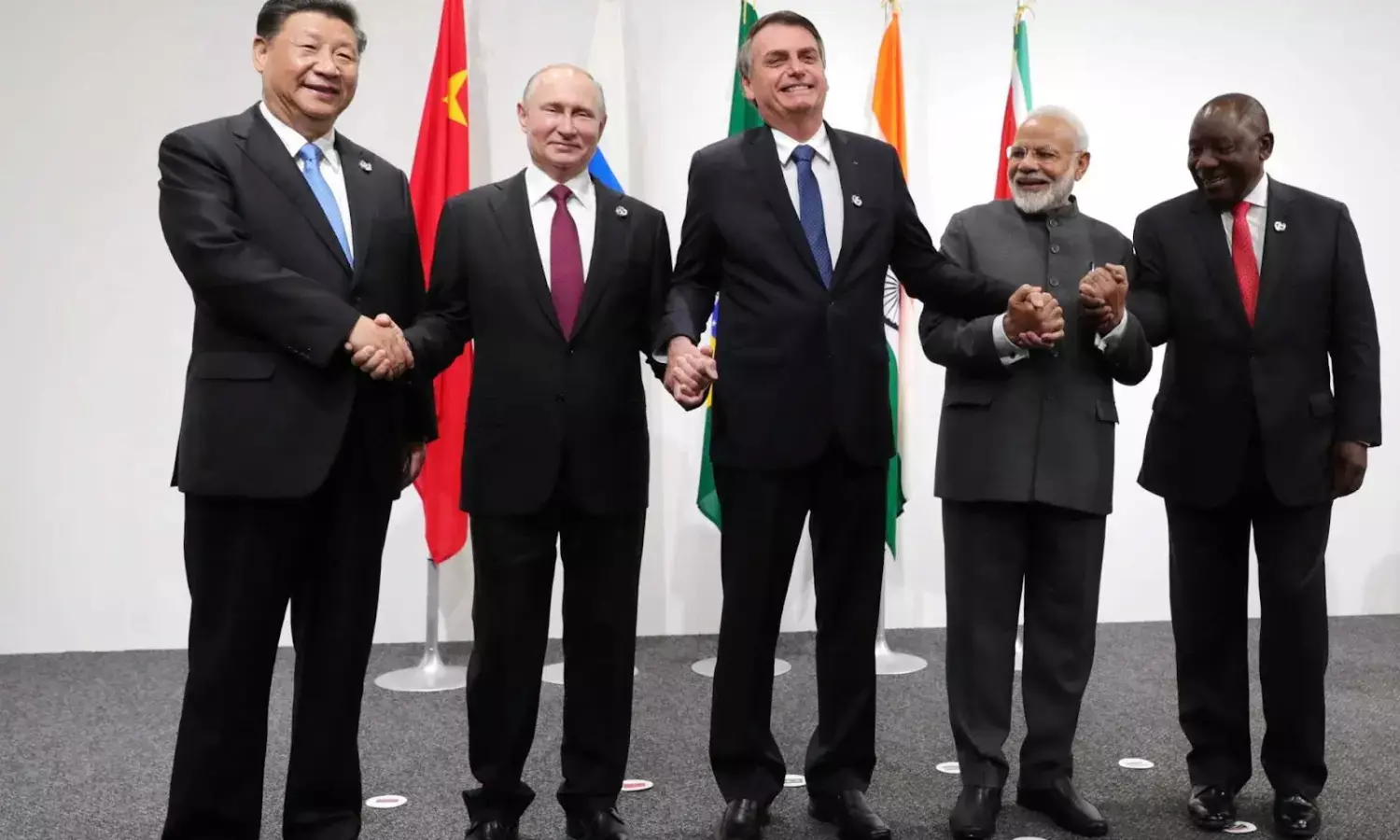
US President Donald Trump has made no secret of his animosity to the BRICS conglomerate. For him this group of Brazil, Russia, India, China and South Africa has been like a red rag which he has criticised continuously during his second term in office, using disparaging and insulting language to do so.
“Go find another sucker nation” he said while opposing the BRICS move to float another currency. And again “BRICS was an attack on the dollar ... .if they want to play that game, I’m going to put tariffs on all your products.” And yet again, “BRICS was set up to hurt us, degenerate our dollar.” And many more such indicating his vehement opposition to the grouping and its policies and programs. At one point he lied saying that under his threats, most nations had dropped out of BRICS whereas it had actually expanded. He also spoke of it as a “little group .. fading out fast” or some such.
BRICS has been expanding steadily. Indonesia, Saudi Arabia, UAE, Egypt, Iran, Ethiopia have become members with the conglomerate now representing 45% of the world's population and of course a large section of the GDP. It is recognised as a strong Global South Coalition and has made progress on what was just an idea of BRICS PAY, a cross border alternative currency. Apart from finance, BRICS has taken a leader in building South-South cooperation; in pushing for reforms in the United Nations for more just and equitable presentation (including women Secretary General candidates as there have been only men in to the top post till now); and basically create a substantial and influential block for world peace and cooperation.
India is all set to take over the Presidency of BRICS and its trade deal with Trump is bound to create some tensions within, given the initial reports and the American President’s own posts that suggest an entry into all Indian markets including agriculture, and a decision inspired by Trump to stop purchasing all Russian oil. While there is nothing in the BRICS agreement that prevents members like India from entering into such financial and trade deals with America, this is bound to create some tensions within BRICS. And raise questions that might well be asked of India before and during the meetings.
New Delhi clearly hopes to be able to walk all sides with some ease, and maintain a delicate balancing act that will keep it on the good side of all such formations. After all India is also a member of QUAD as the mandarins of South Block point out, but given its key role as a core and important member of BRICS questions will definitely arise. Answers will lie in the coming meetings, and India’s ability to convince the member nations of its good intent, and ability to negotiate the nuances and pressures of strategic relations with opposing sides. After all, in this increasingly polarised world, nations are being asked to broadly take sides with non-alignment now a policy of the past. And more so in Trump’s world where he clearly defines his enemies and his friends.
After a hugs and embraces initial start, there were definite signs of tension between Washington and New Delhi. While the latter has perfected the art of silence, the former under its highly vocal President, let it be known that the differences were over tariffs and trade and BRICS, and India needed to walk the line. After a few tumultuous weeks and targeted potshots by Trump at the Indian government, he announced that he had entered into a trade deal with India. And gave details that Ministers in the government have ‘clarified’ or ‘denied.’ However, the perception that India in its presidency year on BRICS has succumbed to Trump diktat continues to gain ground and will cast a shadow over the summit unless clarification and actions suggest otherwise.
In an environment blurred by assertions and denials, the fine print details of the trade deal between the two countries have still to emerge. But it is certain now that India has stopped buying Russian oil, first having reduced the quantity and now having agreed to stop it altogether. This is where the optics and internal bloc dynamics might be complicated as while China itself has trade deals with the US, these have not cut into its relationship with other strategic groupings and bilateral relations. So while the US-India trade deal moves into bilateral access impacting directly on India – good or bad that is for another article–it also comes hinged to India’s acceptance of stopping oil imports from Russia (in roubles) to buying oil from America and Venezuela (in US dollars). The message is stark.
China has stepped in immediately to help Russia out with direct oil imports. As China is adamant that BRICS emerge as a strong alternative to American dominance and the American dollar in strategic and financial terms. It is an important platform for the Global South, and much will depend now on the course India decides to follow as an important and influential member of BRICS.
It is clear that over the years China, with the full support of Russia and indeed India, Brazil and South Africa, has brought in an independent agenda aimed at multipolarity by reducing the financial control of the American dollar. Strategic interests are tied to this. And as such China for one will not allow any dilution of the same, beyond a threshold. In this it has the support of the other core group members. India, on the other hand, is still keeping all doors open through what it believes will be adept diplomacy, but in a world where countries are being pushed to take sides this might end up closing important doors and increasing dependencies.