

- >>
- OPINION
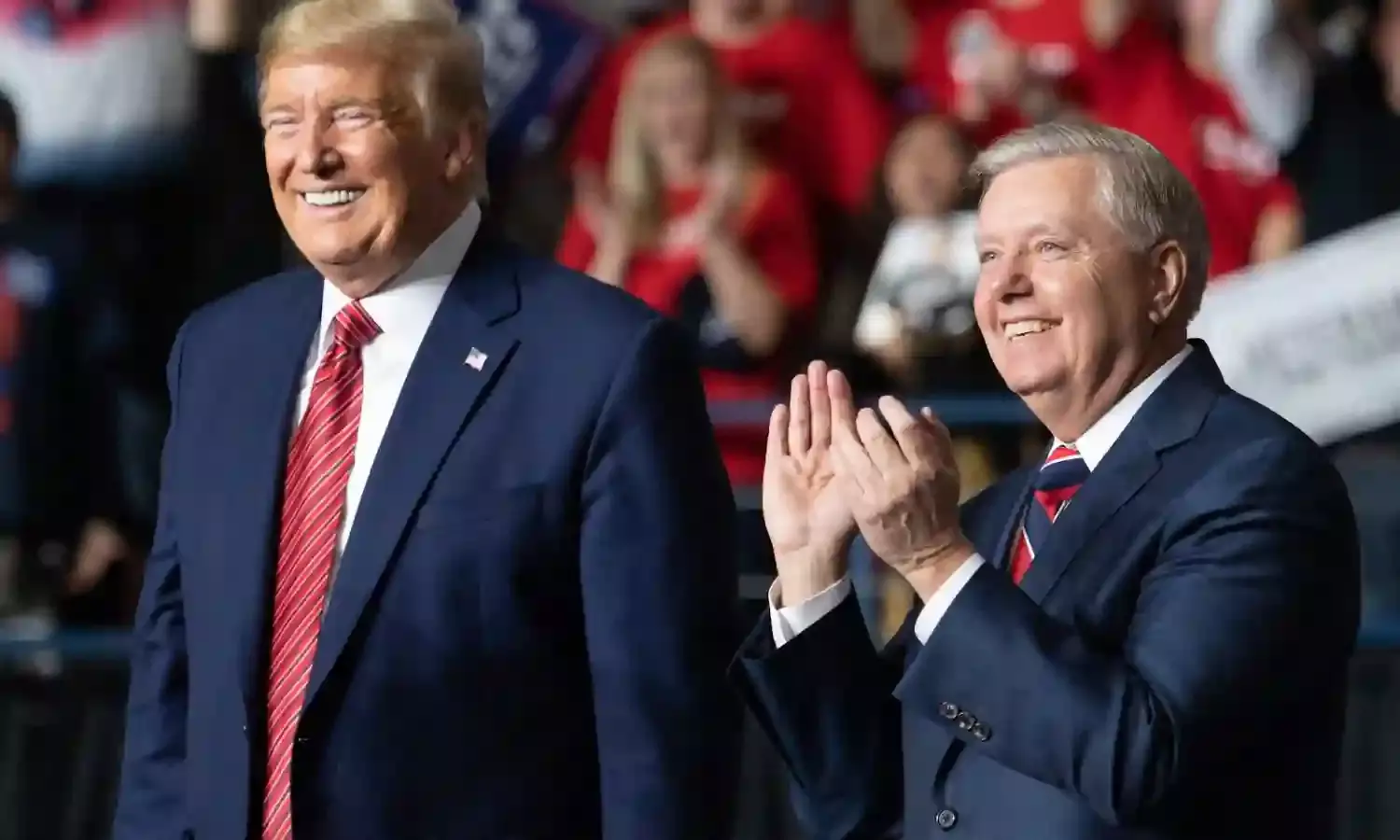
A recent threat by a senior United States Senator Lindsey Graham aimed at India, China, and Brazil over their continued oil trade with Russia is as misplaced as it is hollow and hilarious.
The declaration to impose tariffs and "crush" economies reveals not strength but an outdated sense of American unilateralism. It reads like a misplaced geopolitical muscle flex. But to put it bluntly: Graham is talking through his hat.
India is not a passive player in the international system. It is a sovereign nation pursuing energy security with calculated precision. At present, a significant portion of India’s energy basket is supplied through Russian crude, procured at competitive prices, refined internally, and then sold globally. Once refined, the product is no longer Russian oil by definition.
The rules of international trade do not criminalise this process, and Western sanctions do not extend to third-country refined outputs. That is not a violation of sanctions, and no amount of theatrical warning can change that. That fact alone neutralises his high-volume bluster.
There are two parallel realities here. Reality one: India is already a top buyer of discounted Russian crude. Roughly forty per cent of India’s total oil imports now come from Russia. That makes India one of Moscow’s largest clients globally. India’s refiners mop up the oil, turn it into diesel, petrol and jet fuel, and re-export it to global markets. When this refined product leaves Indian shores, it is no longer technically “Russian crude” and thus falls outside the restrictions imposed by the West.
Reality two: the EU’s price cap on Russian oil has just been lowered from sixty to about forty-seven dollars per barrel, with a ban looming on fuels made from Russian crude. Those measures are being positioned as a double whammy to constrain India’s energy trade.
India’s official position remains firm. Decisions related to energy imports are determined by national interest, not external pressure. With this in mind, New Delhi has diversified its supply chains across multiple countries, including the Gulf region, African exporters, and even the United States. The capacity to withstand supply disruption is already in place. What is being portrayed as a crisis is a carefully anticipated contingency.
Foreign Secretary Vikram Misri has made it crystal clear: energy security is non-negotiable. We will not bow to threats. We have diversified supply lines, from Gulf exporters to African producers to the United States. We have ready markets for our finished fuels. We are nimble, we are pragmatic, and we refuse to be coerced.
The remarks made recently by India’s petroleum minister further reinforce this posture. The minister outlined clearly that the country is prepared for any form of external interference in its oil trade. Sources have been secured, channels have been arranged, and market alternatives are available. Even if restrictions are placed on exports to Europe, other markets across Asia, Latin America, and Africa are ready to absorb these refined fuels.
Now let us examine the flimsy foundations of the Senator’s threat. The proposed 100 per cent tariffs would hit economies hard, yes, but they would also send global oil prices skyrocketing. Inflation would ripple across supply chains. Consumers in the EU and beyond would pay the bill. Implementing such tariffs would likely become a global economic headache, not a neat geopolitical win.
Graham’s warning is political theatre, without legal grounding. India never agreed to the Western price cap. India is not a party to G7 sanctions. Transactions have been arranged in non-dollar currencies, often outside Western banking channels. Much Russian crude is shipped via a so-called “shadow fleet” of vessels operating beyond the reach of Western insurance and finance systems. In short, the very architecture of these threats is ill-suited to constrain India’s sourcing.
What’s more: when European officials complain about refined fuels entering Europe via India, they expose their hypocrisy. If Europe refuses direct Russian oil, but buys the same refined fuel from Indian refineries dependent on Russian crude, sanctions have been vacated at the refinery gate. This is precisely the “backdoor entry” European officials have called out. By raising objections now, Europe risks exposing its dependence and inconsistency.
We’ve publicly called out European double standards with Western nations themselves continuing to buy Russian piped gas to sustain their winter heating needs. Western elites are feigning virtue while squirrelling away our refined fuels.
This dynamic means sanctions no longer cut Russia’s war chest. Instead, they impose higher operating costs, create loopholes, and add complexity to global trade flows. Russia continues to ship oil using shadow fleets and opaque logistics, while Indian refiners profit from arbitrage, spreading refined fuels to markets starved by Western bans.
From India’s viewpoint, this entire episode is not about confrontation. It is about autonomy. India’s energy policy has been formulated to protect its economic interests, maintain stability in its domestic market, and ensure that its industrial growth is not held hostage to international politics.
If the European Union or United States chooses to create artificial constraints on trade, India will recalibrate accordingly. It is not new to work around barriers. Whether that means reassigning its exports or restructuring its financial pathways, India has shown the capacity and will to adapt.
From India’s perspective, none of this is by accident. It is a strategic design. India benefits from discounted crude, ensures capacity utilisation in domestic refineries, and sells to clients who cannot ignore supply constraints. If Europe shuts its doors to our fuel, we will redirect exports to other markets. OPEC nations and alternative buyers are ready to fill Europe’s void. The global oil arbitrage adjusts, and India holds energy leverage, not victimhood.
Looking ahead, India’s playbook is clear:
- Diversify supply: continue increasing volumes from UAE, Africa, the U.S. and other non-Russian sources.
- Secure alternative markets: If Europe clamps down on refined fuels, India will pivot exports to Southeast Asia, Africa, and Latin America.
- Adjust finance channels: move to non-Western currencies to avoid dollar/euro sanctions; further anonymise logistic chains via shadow shipping.
- Maintain diplomatic clarity: consistently articulate that India’s energy policy is driven by domestic imperatives, not external pressures.
Lindsay Graham is banking on a fear narrative: that India will buckle under economic duress. But India is not unaware. We knew threats were coming. That is why Energy Minister Hardip Puri has already publicly confirmed India has robust alternate crude and export arrangements. We will keep energy flowing regardless of Washington’s rhetoric.
There is no room for moralism here. This is realpolitik. Every nation pursues its national interest. For India, that means affordable energy, supplier diversity, safeguarding refining margins, and ensuring stable revenues from fuel exports. It does not mean yielding to external ultimatums.
The choice for the West is clear. It can work with India, respecting its autonomy, or continue this path of confrontation, which will only lead to deeper fissures. India will not be coerced into abandoning its energy strategy. The doors for dialogue remain open, but they will not open at the cost of national interest.
In a world driven by energy interdependence, coercive diplomacy has limited reach. India’s leadership understands this. It has not reacted with outrage or panic. Instead, it has responded with clarity and calm assurance. India is ready for any contingency. It has the supply, the markets, and the resolve to weather the storm.
In short, when Senator Graham threatens to crush economies that continue buying Russian oil, he is shouting up the wrong tree. India is not on offer. Our strategy is clear, our options remain strong, and our resolve is unbreakable. If he thinks such threats will sway our policy, he’s gravely misjudged India’s standing.
Bad-faith posturing might play well on Fox News. But the world is watching. Energy is power. Oil is leverage. India knows its weight. We will navigate sanctions regimes, shift payment channels, and find willing markets. Economic coercion will not force compliance. The future belongs to those who adapt and India is ready.
The Senator can keep warning. India will keep rising.
Lt General A B Shivane, PVSM, AVSM, VSM is a veteran of the Indian Army. The views expressed here are the writer’s own.