

- >>
- OPINION
Why is India’s Higher Defence System not Stabilising?
Urgent attention needed
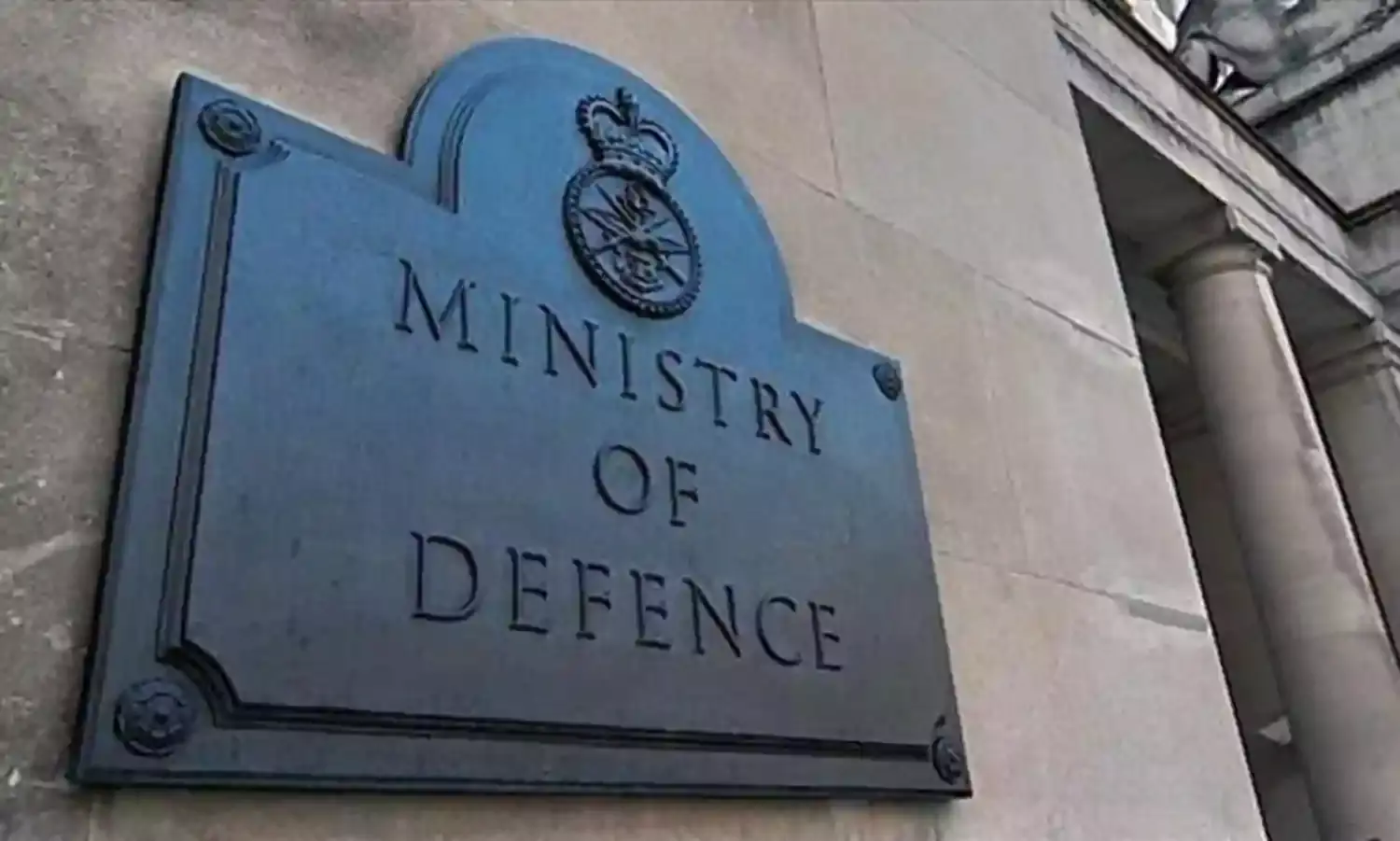
The present Higher Defence Structure of India has a large number of weaknesses or in other words it has so many lacunae that it is nearly unworkable.
The British legacy-based Higher Defence System, which was carved out on Independence in 1947 after de-colonisation of the country, as modified to what it exists today, inhibits planning and decision-making; long-term focus; intimate coordination; integration; cost-efficiency; and elimination of adhocism.
Past efforts to rectify these weaknesses have been stymied by inertia; resistance to change; turf considerations; all-round apathy; lack of knowledge of security strategies amongst the political leadership and the higher bureaucracy; and sadly a misplaced apprehension about the loyalty of the military, something invented by the bureaucracy in the early years of Independence and sustained by the expanding bureaucracy, while the armed forces ignored it on the grounds that it will be their work that will speak for them.
The end result is that while the armed forces have endeared themselves to the citizens of the nation, the bureaucrats rule the roost, while the political leadership acts blind!
The current dispensation needs to change, not only because it is intensely flawed, but in the views of our Hukmaran, it is not important! However, considering the current turmoil in the world, it is in urgent need of change.
This is especially so today, as our nation looks to move up from a regional power configuration to a great power status; desires to be a permanent member of the UN Security Council; and has its aims set to become a power of reckoning in the world. Strategic challenges ahead to our sovereignty and security demand urgent changes in our decision-making structure, so that it is efficient, fast and works like clockwork.
In brief, most problems are due to four reasons, viz political, bureaucratic, not taking advice of the military hierarchy and incorrect reading of the strategic situation. A modified System must shun these.
For a change, let me take a deep dive and commence with the Kitchener-Curzon controversy (1904-05), although it has no relevance to the current Higher Defence Structure, as it had evolved after Independence and how it has deteriorated over the years. It may persuade writers not to quote it while discussing this particular subject.
The dispute was in colonial times when all policy decisions were taken by the India Office in London. The Viceroy was akin to the senior most bureaucrat as he implemented the policy laid down by the Crown, through the India Office, although he had a fair degree of autonomy, within the policy parameters received from London. The Viceroy was not an elected person but one appointed. Hence, to call it a dispute between ‘civil’ and ‘military’ is not only patently wrong, but gives the incorrect impression of a civil-military dispute.
The dispute did not involve any change or suggestion of ‘the order of precedence’. In the hierarchy in India of that time, the Viceroy was at number one position and the C-in-C was at number two. Their scope of work and authority were well defined. At no stage did either of the incumbents wanted or sought a change.
The objection of Kitchener was to the creation of one more military power centre in the Viceroy’s office, who would scrutinise and sit over the judgement of the C-in-C. It was obviously an attempt by the Viceroy to usurp the powers of the C-in-C and hence was correctly opposed by Kitchener and was rightly upheld by the India Office and the Crown.
Let me point out that later events, viz. the sterling role played by the Indian Army in both the World Wars, as well as operations against the various tribes in the erstwhile NWFP is testimony that the army flourished under this dispensation
After Independence in 1947, It was Lord Ismay (a senior staff officer to the Viceroy) who had evolved our higher defence system, which consists of inter-locking committees, which were meant to give ‘full political control and yet ensure functional integration between the three services, without bureaucratic control’.
The structure that was evolved and which still continues with some changes was based on a three –tiered system. At the apex of this structure was the Cabinet Committee of Political Affairs or CCPA, which was later renamed as the Cabinet Committee of Security (CCS). It consisted of the Prime Minister, Defence Minister and selected Ministers, with Service Chiefs and Defence Secretary in attendance at all meetings. The highlighted portion is hardly ever observed.
The second level was the Defence Minister's Committee (DMC), chaired by the Defence Minister, with Service Chiefs, Defence Secretary and Financial Adviser (Defence Services) {better known as FA (DS)}, as members. It served as the top policy formulation organ in the MoD. However, it rarely met for decades. It was later converted as the Morning Meeting of the Defence Minister, thus further reducing its efficacy.
The third level is the Chiefs of Staff Committee. It is a forum for the three Service Chiefs (and now including the CDS) to discuss matters having a bearing on the activities of the Services and also to advise the Minister of Defence. In theory, the COSC is the highest authority on military matters in the country. However, a major shortcoming of this body is that it exercises no real power.
Over the years, the committees either ceased functioning or their character was altered drastically. This eroded the role of Service Chiefs as professional military advisors to the government and at the same time precluded professional interaction between Services HQ and agencies outside MoD. With the appointment of National Security Adviser (NSA) and its Secretariat, which started with one person, it has burgeoned into a huge cabal of bureaucrats with one or more Deputies, advisers and officials from many departments and agencies, Horror of horrors, the Chiefs of the Services were also placed under him, an appointment with neither Parliamentary nor Constitutional approval.
In the USA, from where we picked up the idea, the NSA is an appointment for advising the President on security issues, not the government. I recall that when I was attending the US Army War College Course in 1988-89. In his talk to the students, the then NSA of USA, Maj Gen Colin L. Powell, (later Chief) implicitly stated that he was the NSA to the President and not to the US Government.
The result of such activities was that the armed forces became isolated from such important subjects as formulation of nuclear policy; the Comprehensive Test Ban Treaty (CTBT); Nuclear Non-Proliferation Treaty (NPT); military use of Space; disarmament initiatives; chemical weapons policies/treaties; and missile technologies. The armed forces were thus totally removed from the decision-making processes.
Even within the Services, on account of gross interference of bureaucrats, the introduction of the appointment of Chief of Defence Staff (CDS), instead of streamlining the Higher Defence System of the nation, has resulted in worsening it. It will not be incorrect to state that strategic issues have deliberately been pushed to the boon docks. This is so when politically and economically the entire world and particularly our region is in flux, as anything can happen at short or no notice.
Despite decades since the Kargil Review Committee had directed the formation of a CDS as the single point adviser on defence issues and an amalgamated and truly joint MoD, we are still searching for assigning duties for the incumbent. Consequently, the whole structure of theatre commands hangs in balance and is virtually in cold storage.
Only a few days back, the Chief of Air Force has publicly stated that theatre commands are not needed. He also implied or reinforced that the air force can win wars without the other two services; a thought debunked since the issue was first raised even before World War II.
It appears that the three defence services are not entirely on the same page as regards formation of the CDS system in its full play and our Hukmaran continue to let the status quo prevail! In the CDS system the overall operational command must rest with the CDS and individual service chiefs handle only staff functions related to their respective service.
The phrase ‘Higher Defence Management’ or System usually conjures up images of only the military, but this is not at all correct, as ‘Defence Management’ encompasses much more. No doubt the Indian Military is a significant player in this endeavour, but unless we bring all instruments of the nation together, ‘higher defence’ will remain incomplete.
National Security Strategies should aim at the creation of national and international political conditions favourable to the protection or extension of vital national values against existing and potential adversaries. It is the fountainhead from which defence policies; military strategy; and ultimately the tools to implement defence policies are evolved. Defence strategy and higher direction of defence must constantly evolve through objective analyses of present and future needs.
All agencies and departments of the government, as well as many others have to be involved in some manner in ensuring that the national aims, as related to defence, are achieved. Waging war and meeting warlike challenges today is a complex phenomenon and such complexities are likely to increase in future. The reasons include high technology; the nature of modern war; new and ever-changing threats and challenges; the sharp rise in the use of non-state actors by some nations; and the reality of nuclear weapons in the arsenals of our potential adversaries. Consequently, integrated and holistic structures are not just desirable but an imperative. Most nations have such structures, but we seem to be out of sync in this respect.
The creation and sustenance of an environment that nurtures these aspirations necessitates development of what is now known as Comprehensive National Power (CNP). There are many ingredients that make up CNP, but perhaps the most important is a structure for Higher Defence that is able to take smart, well-reasoned and quick decisions, especially when the country is in a crisis mode. This cannot be done if each instrument of the state works independently and vertically, as is the case at present.
The major infirmity of our current higher defence structure is keeping the military outside the government, resulting in the political leadership receiving second-hand advice. Professional advice by the hierarchy of military leadership needs to be available to the political executive without it being filtered or altered to suit the perspectives of the bureaucrats. This is a fundamental issue, which needs to be changed immediately. This would improve politico-military responses to challenges and threats; enhance cost-effectiveness; and assist in the best employment of the armed forces.
Complete integration of the MoD and the Service Headquarters needs to be carried out immediately, as a prelude to major structural changes. In addition, there is a need to also integrate those ministries and agencies which deal with similar subjects. Ministries of Defence, External Affairs, Finance and Home must be manned by integrated staff from each other.
This must not be token representation, as has been the norm in the past, but substantial numbers must be posted across these ministries. The same is applicable to representation by the Services.
Management of higher defence needs to be proactive, efficient and long-term oriented, amalgamating foreign and internal security policies and incorporating all relevant instruments of the nation.
Lt General Vijay Oberoi is a former Vice Chief of Army Staff and the Former Founder Director of the Centre for Land Warfare Studies (CLAWS), and now its Director General Emeritus. Views expressed here are the writer’s own.